
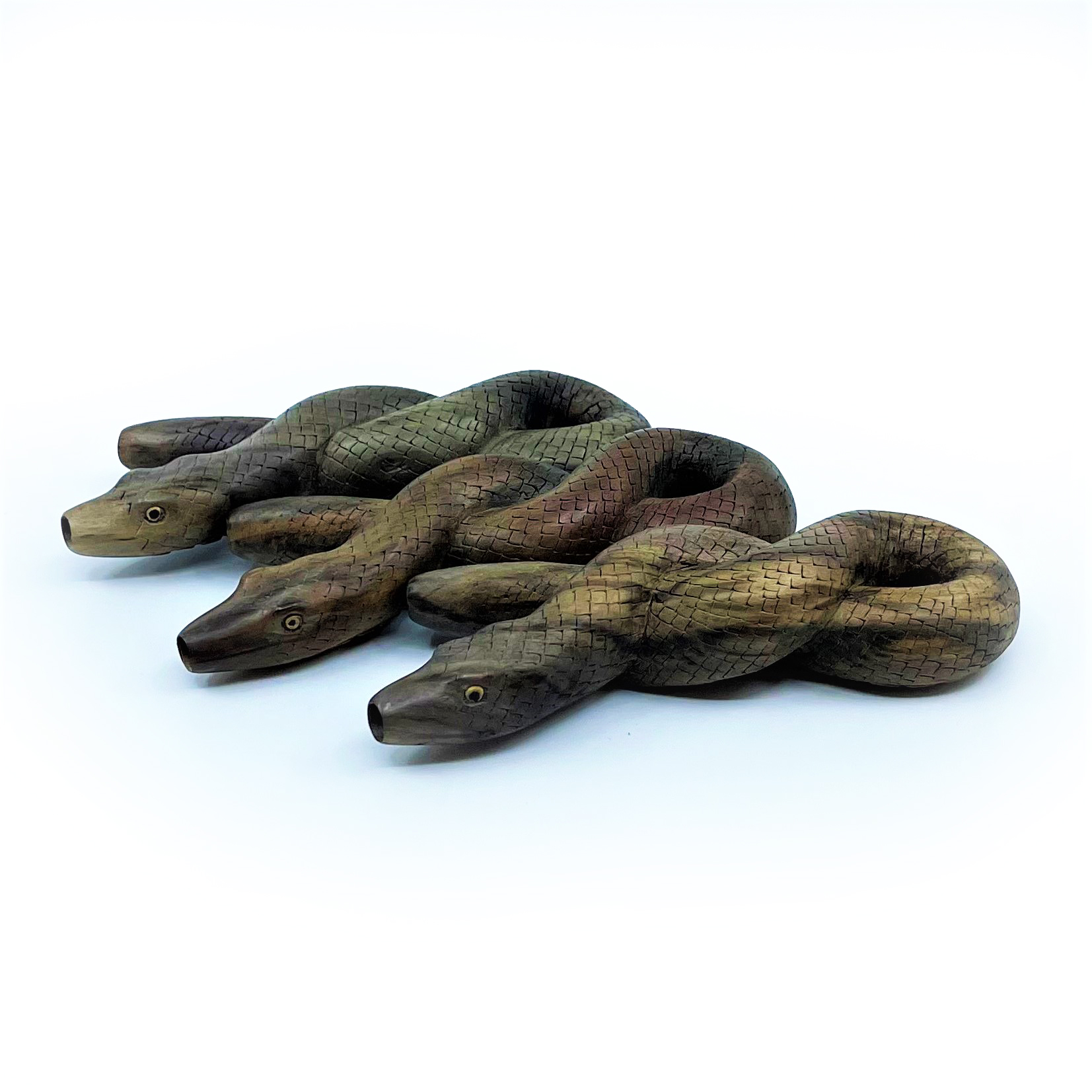
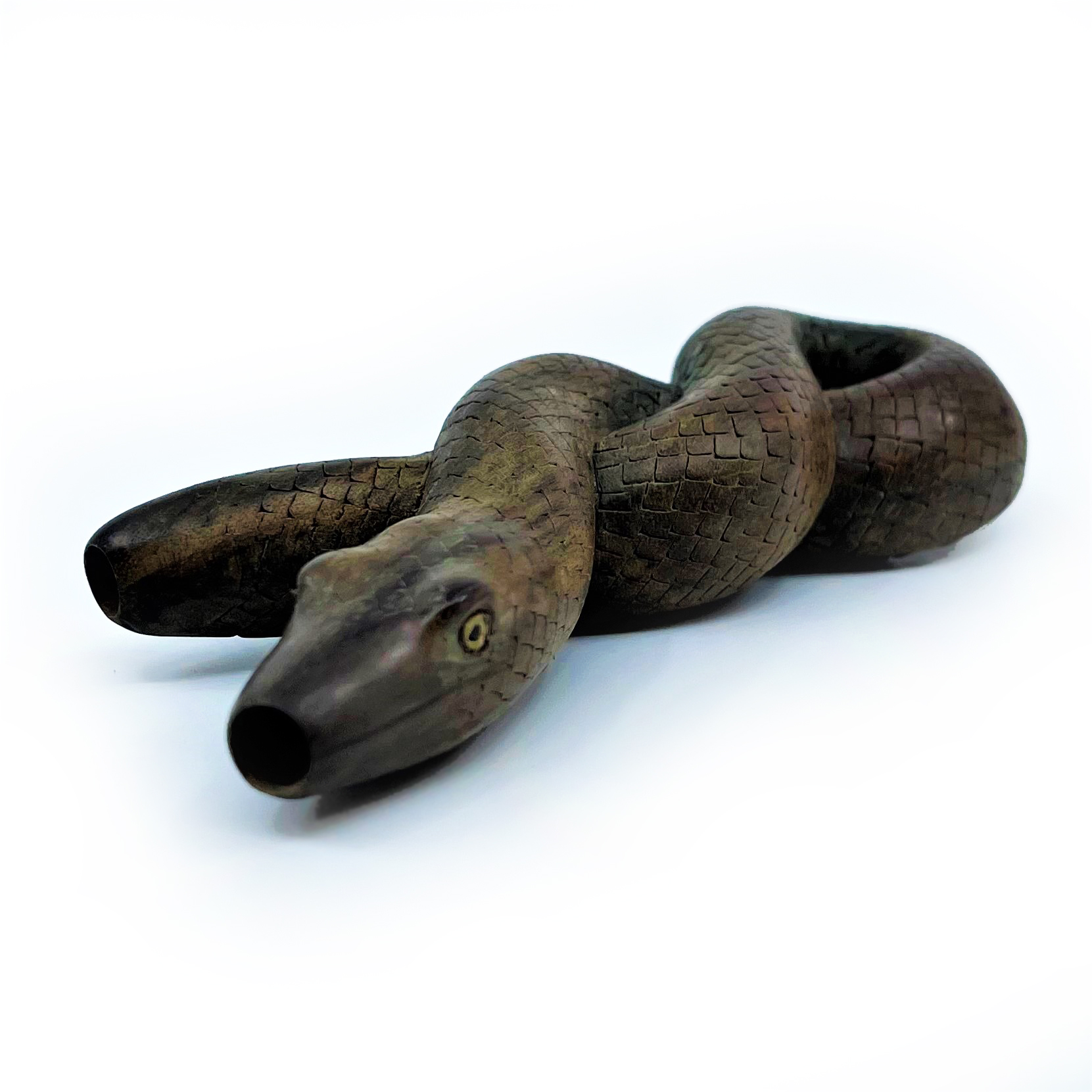
Serpent Kuripe "Lemniscate" - Dark Waru Wood
- Secure payment by card
- E-mail us, we reply swiftly!
- Ships in 1-3 business days
- Fast and secure global shipping
Some aromatic plants and products may have a historical use of folkloric nature, but we offer this product as incense and/or botanical curiosa; neither food grade, for consumption nor medical use, unless other is stated. This means that you should contact your doctor even though, for example, frankincense have been used during the Middle Ages as a remedy for bubonic plague. Avoid contact with skin and eyes. Keep away from children and animals. The snuffs containing tobacco should be used moderately and not daily since tobacco is addictive. The long-term use of tobacco snuff is unknown and should therefore be used with this in mind.
Description
Article no.: BSWKSEDWA
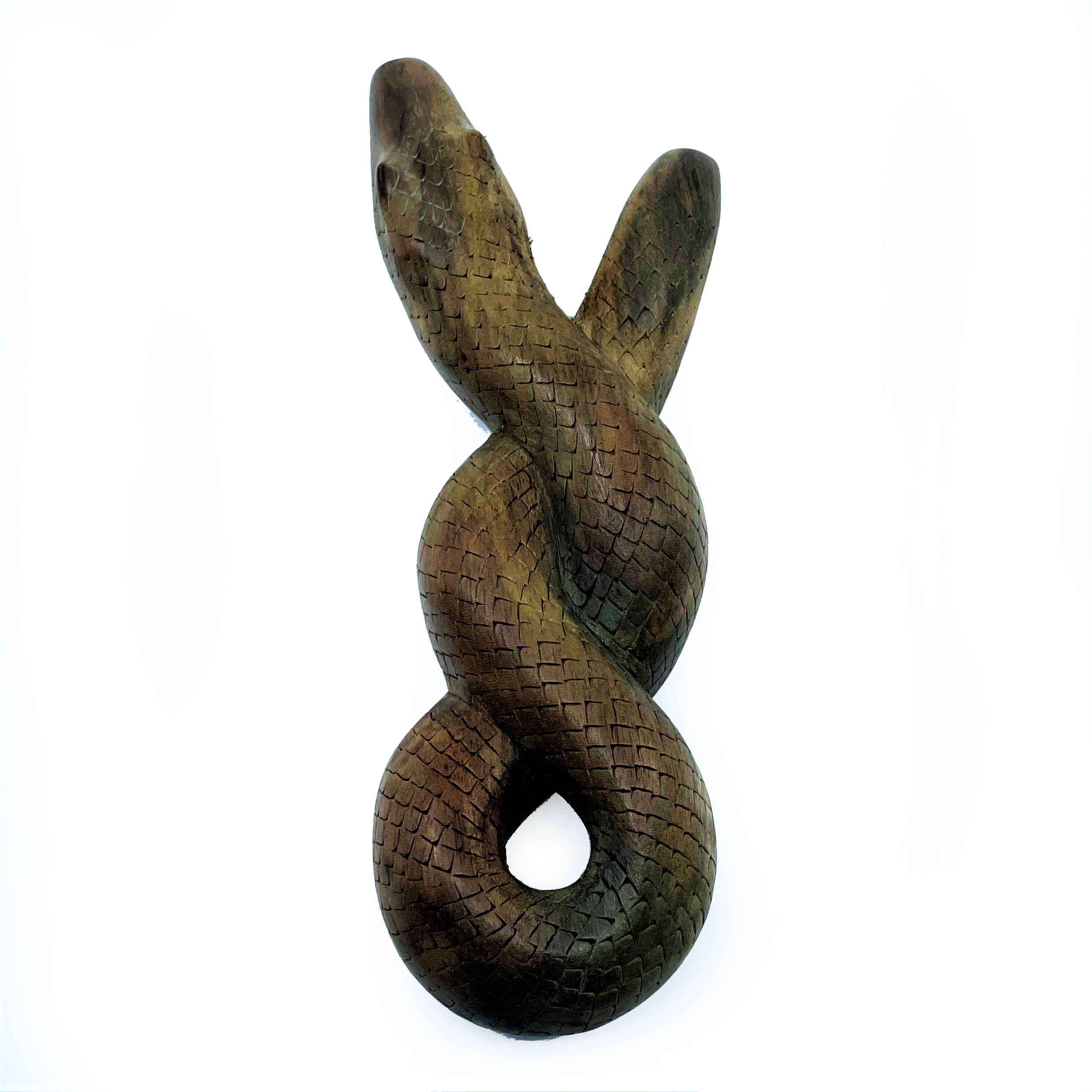
Beautiful and exclusive serpent kuripe, carved by our friend in Bali. These snuff pipes are carved from a single piece of Waru Wood (Hibiscus tiliaceus) which has a shiny surface with a texture that gives the impression of great depth. The coiled serpent fits perfectly in the hand and fits most noses and face types. The serpent is in most cultures a symbol of initiation and rites of passage. The Serpent's venom, its nature to shed skin, association with the trixter, and its connection to kundalini, are also interesting symbols for the shaman.
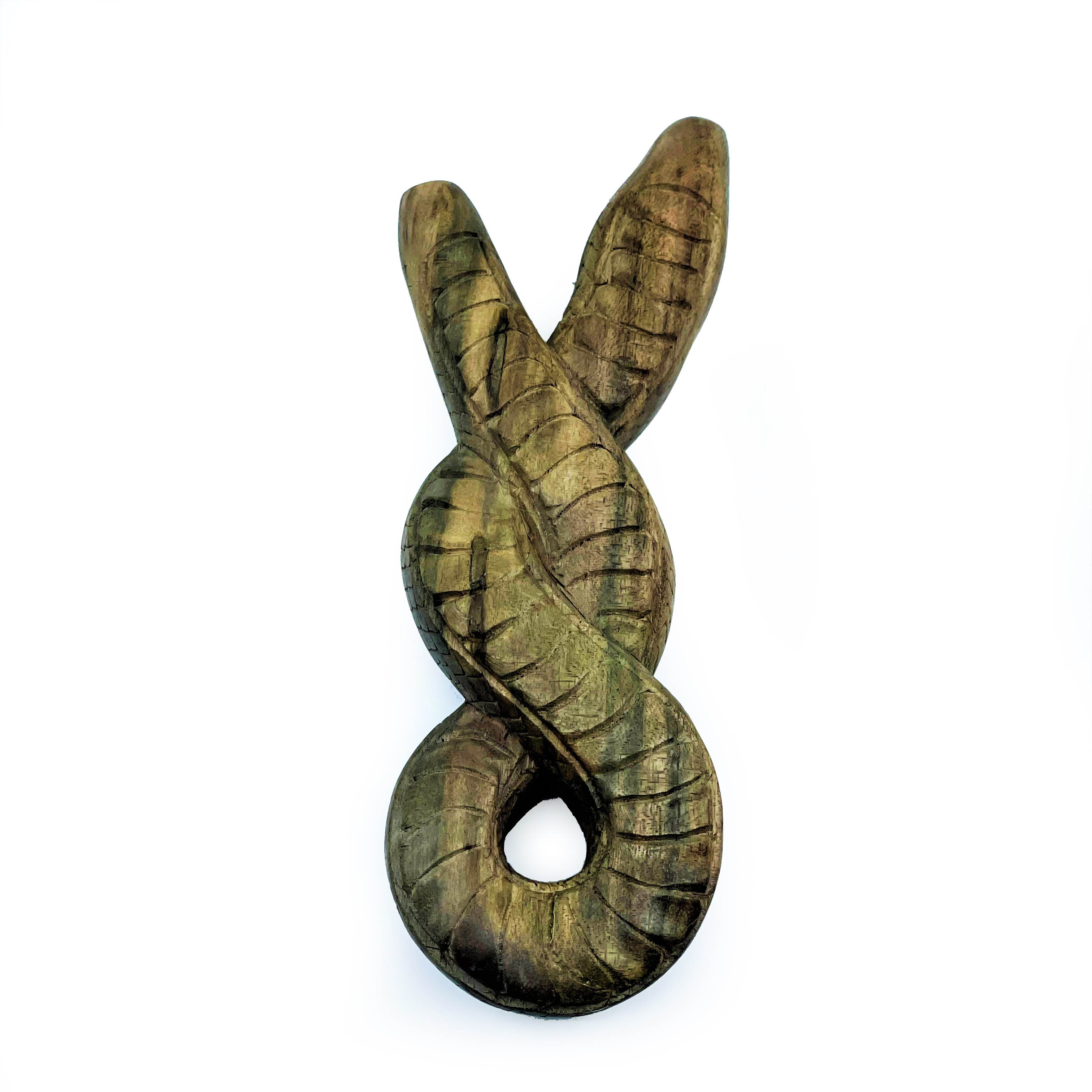
The serpent is coiled in a lemniscate shape (the infinity "8"), which in mysticism has become identified with a variation of the ouroboros, an ancient image of a snake eating its own tail that has also come to symbolize the infinite, and the ouroboros is sometimes drawn in figure-eight form to reflect this identification—rather than in its more traditional circular form.
These shamanic tools from our friend in Bali have been made with love and gratitude. They are made with the intention of creating powerful magical tools for the holiest of purposes. Both the inside and outside of the tubes have been polished with blessed musk oil.
Traditionally, Nu-nu, Rapé and Tobacco snuffs are applied by using a pipe made from bamboo or bone, which is blown through each nostril, on both sides. They can be self-administered using a V-shaped self-applicator pipe, which connects the mouth to the nostrils. Alternatively, the can be administered by another person using a blow pipe, which connects the blower’s mouth to the other person’s nostrils. The self-applicator pipe is known as ‘Kuripe’, and the blow pipe is know as a ‘Tepi’ in the Brazilian tradition.
General suggestion is to use a pea sized amount (50% for each nostril) of medicine for beginners, and dosage can be increased after prolonged use of a specific Rapé. Also, it is suggested that you use them within a quiet sacred space without any interruptions – sitting upright, either cross-legged or in a chair with eyes closed after application. Also, suggested slow breathing after application through the mouth/nose is very important.