
Rangda Kuripe - Waru Wood
- Secure payment by card
- E-mail us, we reply swiftly!
- Ships in 1-3 business days
- Fast and secure global shipping
Some aromatic plants and products may have a historical use of folkloric nature, but we offer this product as incense and/or botanical curiosa; neither food grade, for consumption nor medical use, unless other is stated. This means that you should contact your doctor even though, for example, frankincense have been used during the Middle Ages as a remedy for bubonic plague. Avoid contact with skin and eyes. Keep away from children and animals. The snuffs containing tobacco should be used moderately and not daily since tobacco is addictive. The long-term use of tobacco snuff is unknown and should therefore be used with this in mind.
Description
Article no.: BKRANG
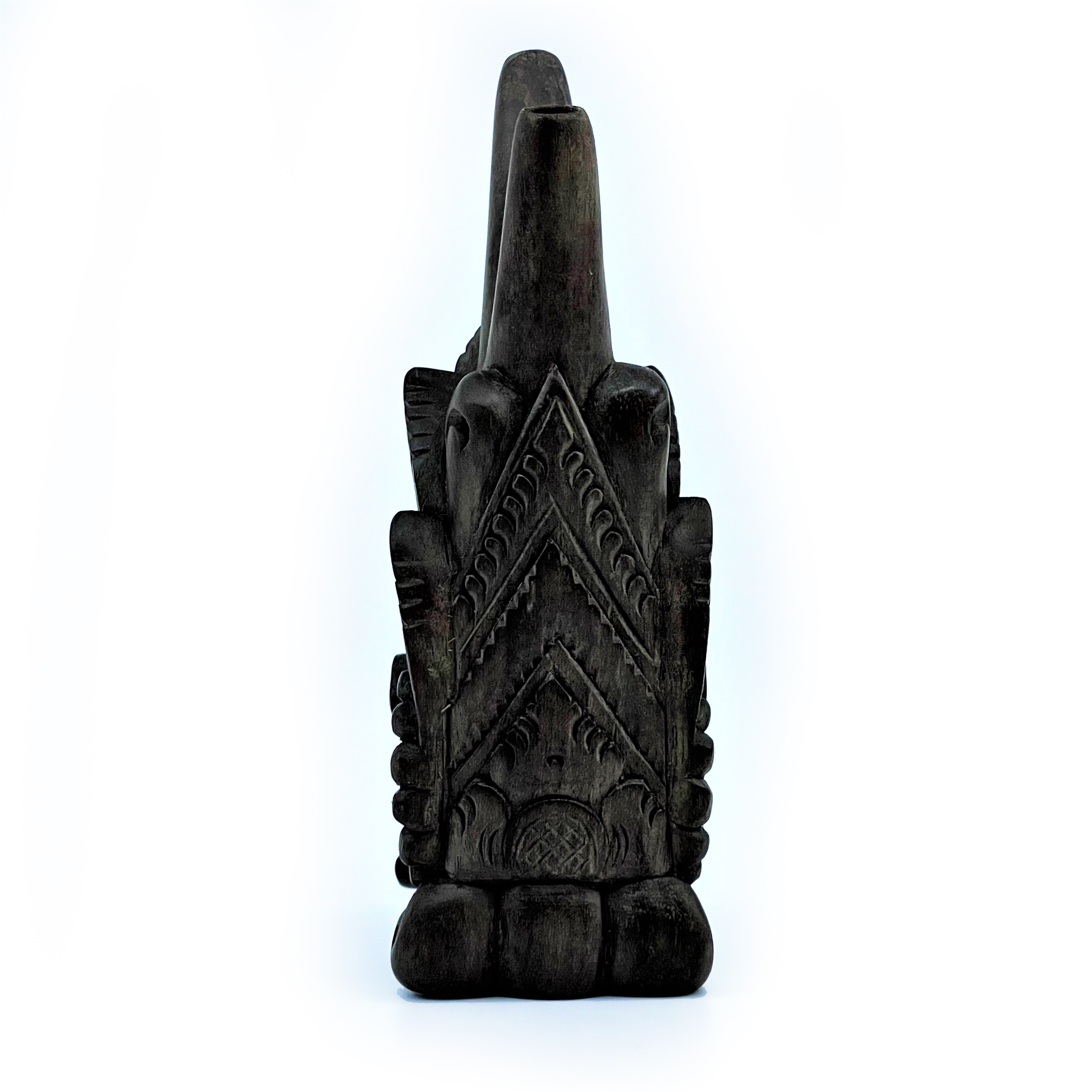
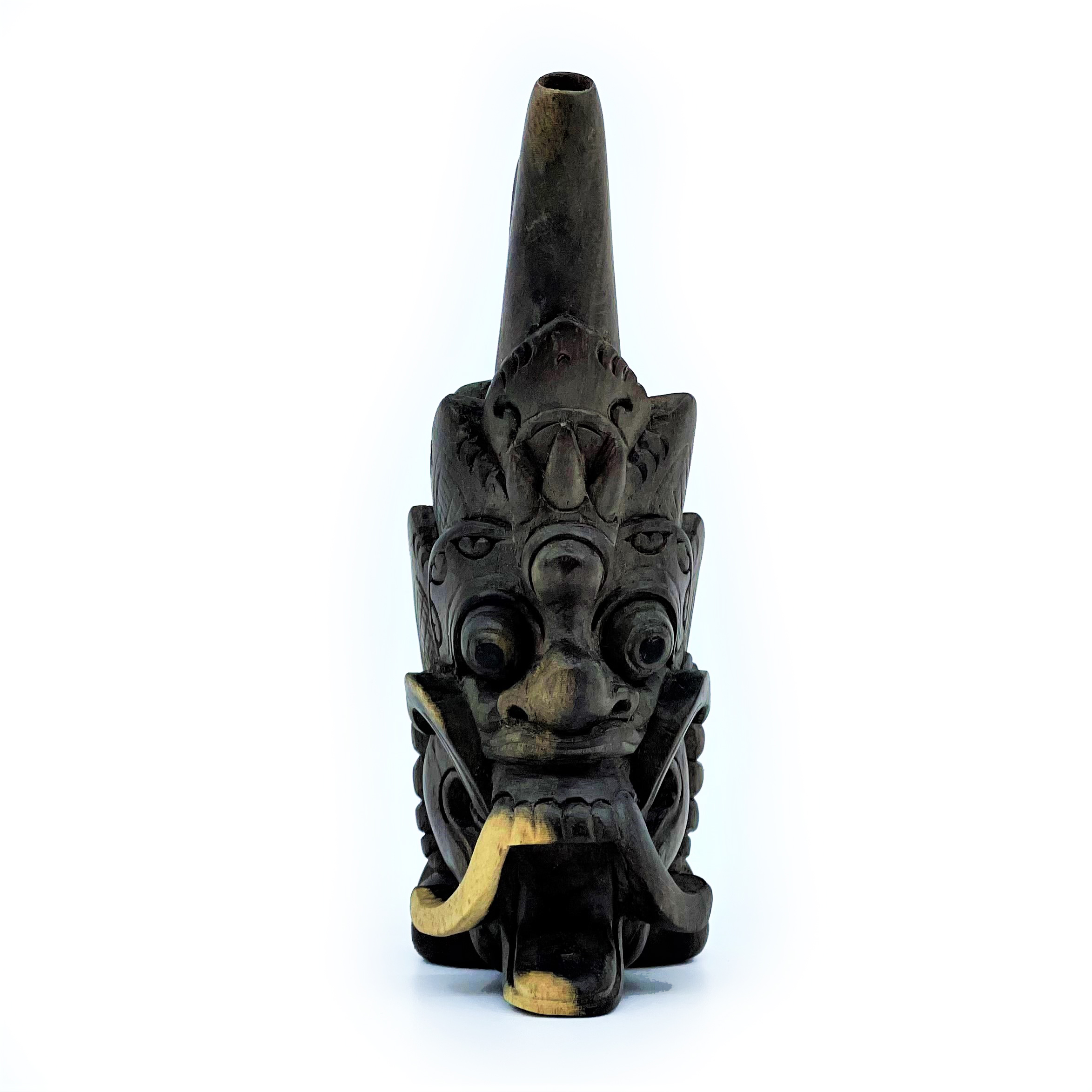
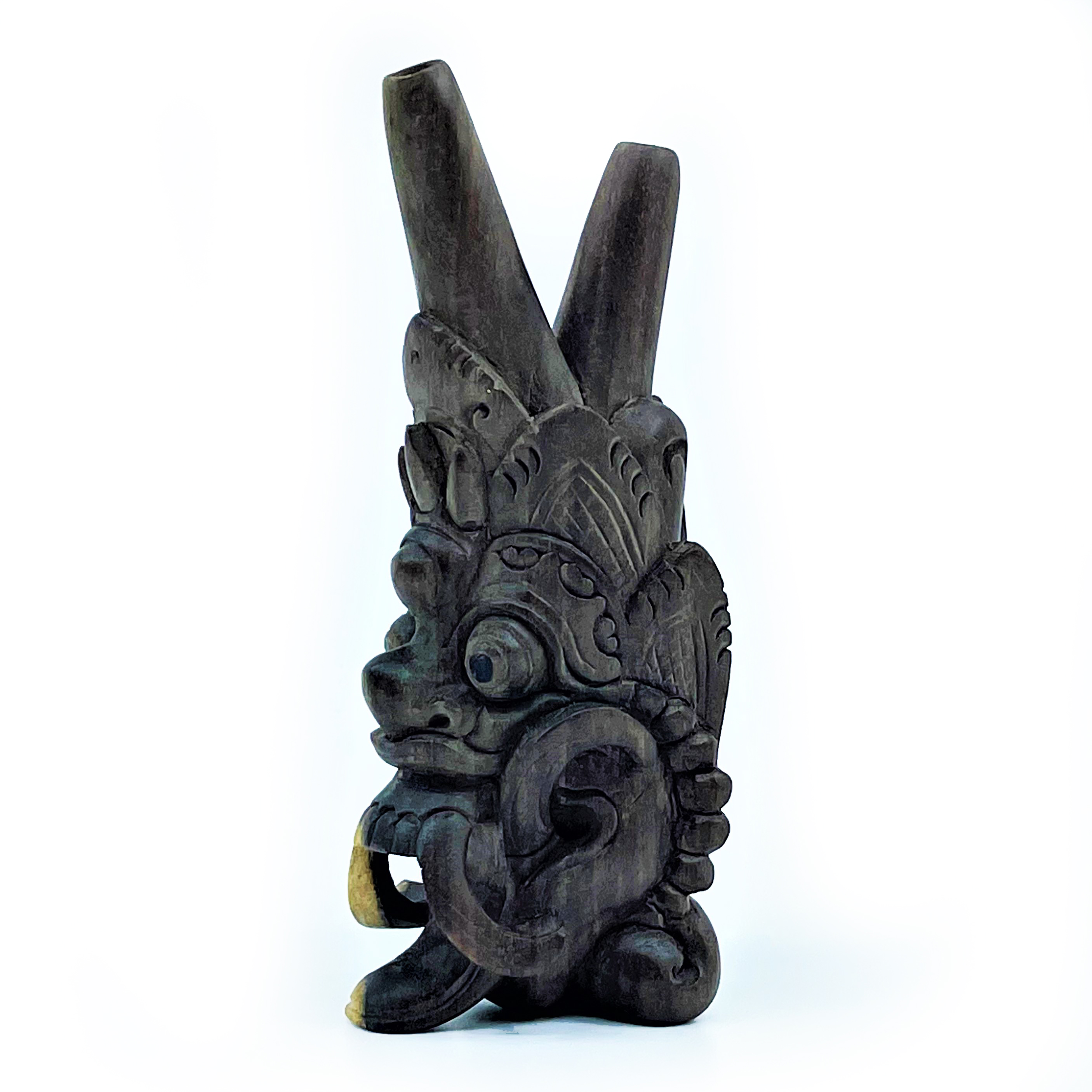
Beautiful and exclusive Rangda Kuripe, carved by our friend in Bali. These snuff pipes are carved from a single piece of Waru wood (Hibiscus tiliaceus). Rangda, which means widow in old Javanese, is the demon goddess of the Leyaks and of witchcraft. Terrifying to behold, the child-eating Rangda leads an army of evil witches against the leader of the forces of good — Barong. The battle between Barong and Rangda is featured in a Barong dance which represents the eternal battle between good and evil. Bali is a Hindu island, and it is suggested that Rangda may also be closely associated with Durga. She has also been identified with the Hindu but tribal mother warrior goddess, and Kali, the black mother goddess of destruction, transformation and protection in Sanskritised tribal Hinduism.
While Rangda is seen as fearsome and by many as the personification of evil, she is also nevertheless considered a protective force in certain parts of Bali, much like Kali is seen as a benevolent mother goddess of fertility and destruction in Northeastern India in Assam, Tripura. The colors associated with her — white, black and red — are identical with those associated with Kali. Her iconography is similar to that of both Kali and Chamunda, who are closely related.
These shamanic tools from our friend in Bali have been made with love and gratitude. They are made with the intention of creating powerful magical tools for the holiest of purposes. Both the inside and outside of the tubes have been polished with blessed musk oil.
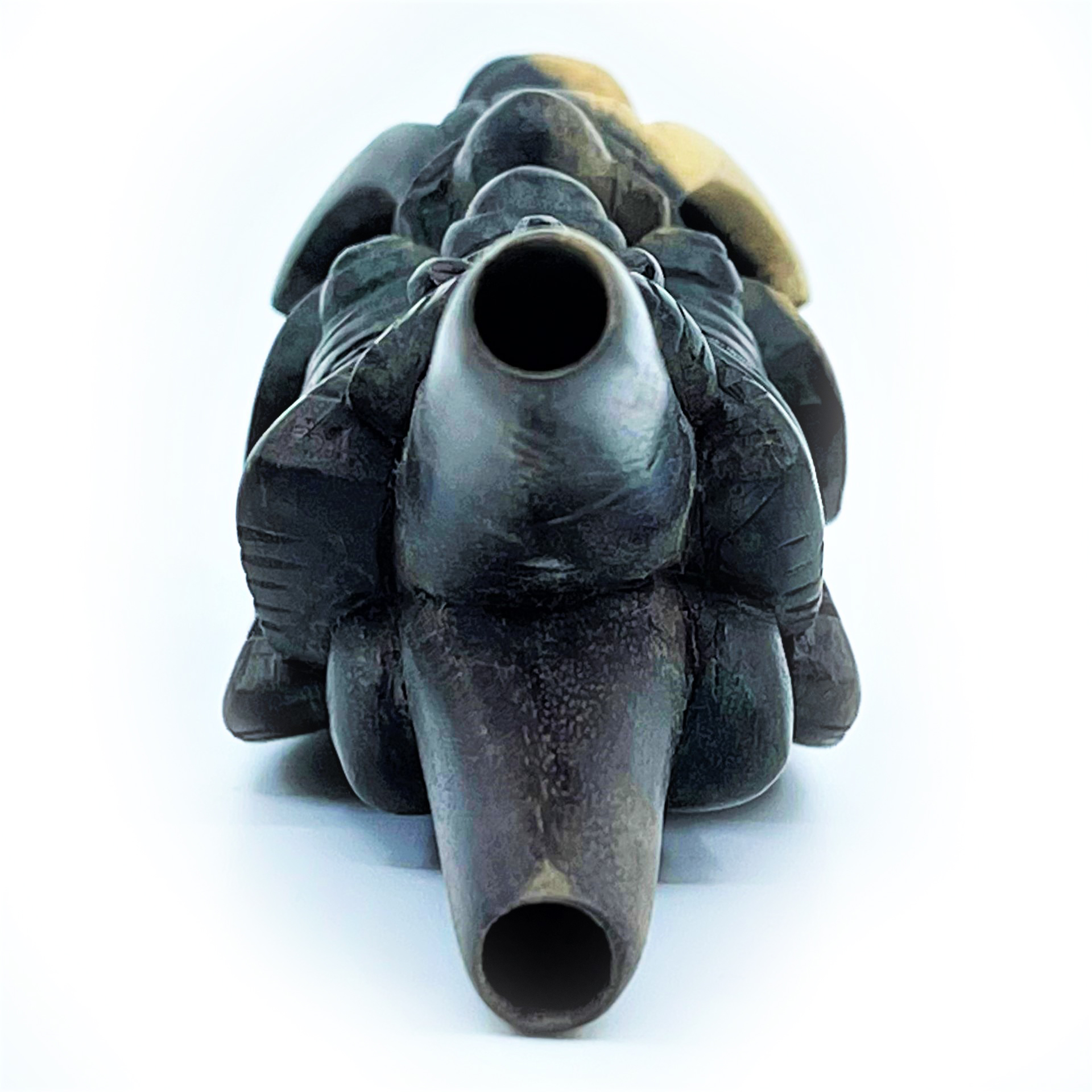
Traditionally, Nu-nu, Rapé and Tobacco snuffs are applied by using a pipe made from bamboo or bone, which is blown through each nostril, on both sides. They can be self-administered using a V-shaped self-applicator pipe, which connects the mouth to the nostrils. Alternatively, the can be administered by another person using a blow pipe, which connects the blower’s mouth to the other person’s nostrils. The self-applicator pipe is known as ‘Kuripe’, and the blow pipe is know as a ‘Tepi’ in the Brazilian tradition.
General suggestion is to use a pea sized amount (50% for each nostril) of medicine for beginners, and dosage can be increased after prolonged use of a specific Rapé. Also, it is suggested that you use them within a quiet sacred space without any interruptions – sitting upright, either cross-legged or in a chair with eyes closed after application. Also, suggested slow breathing after application through the mouth/nose is very important.