
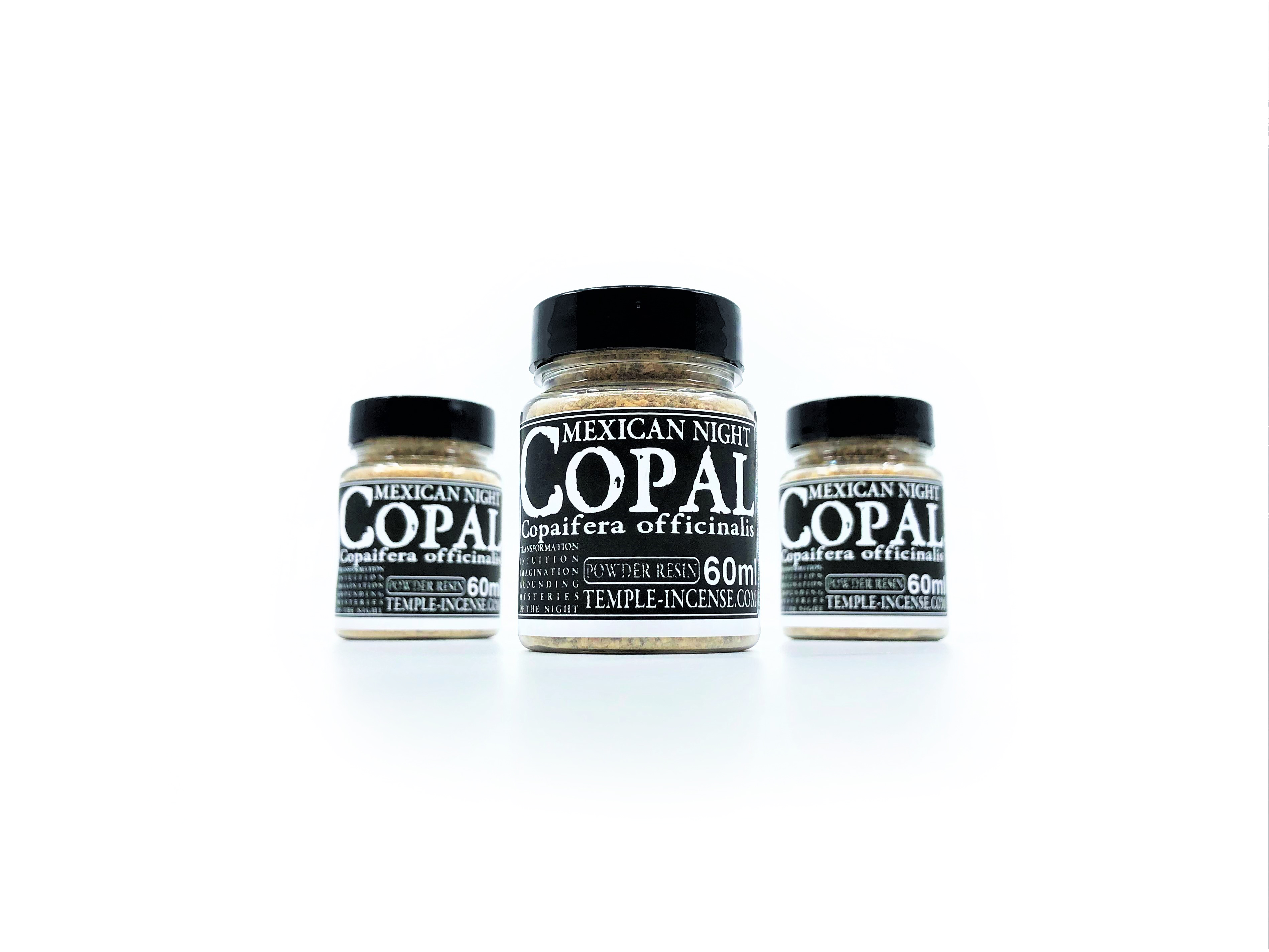
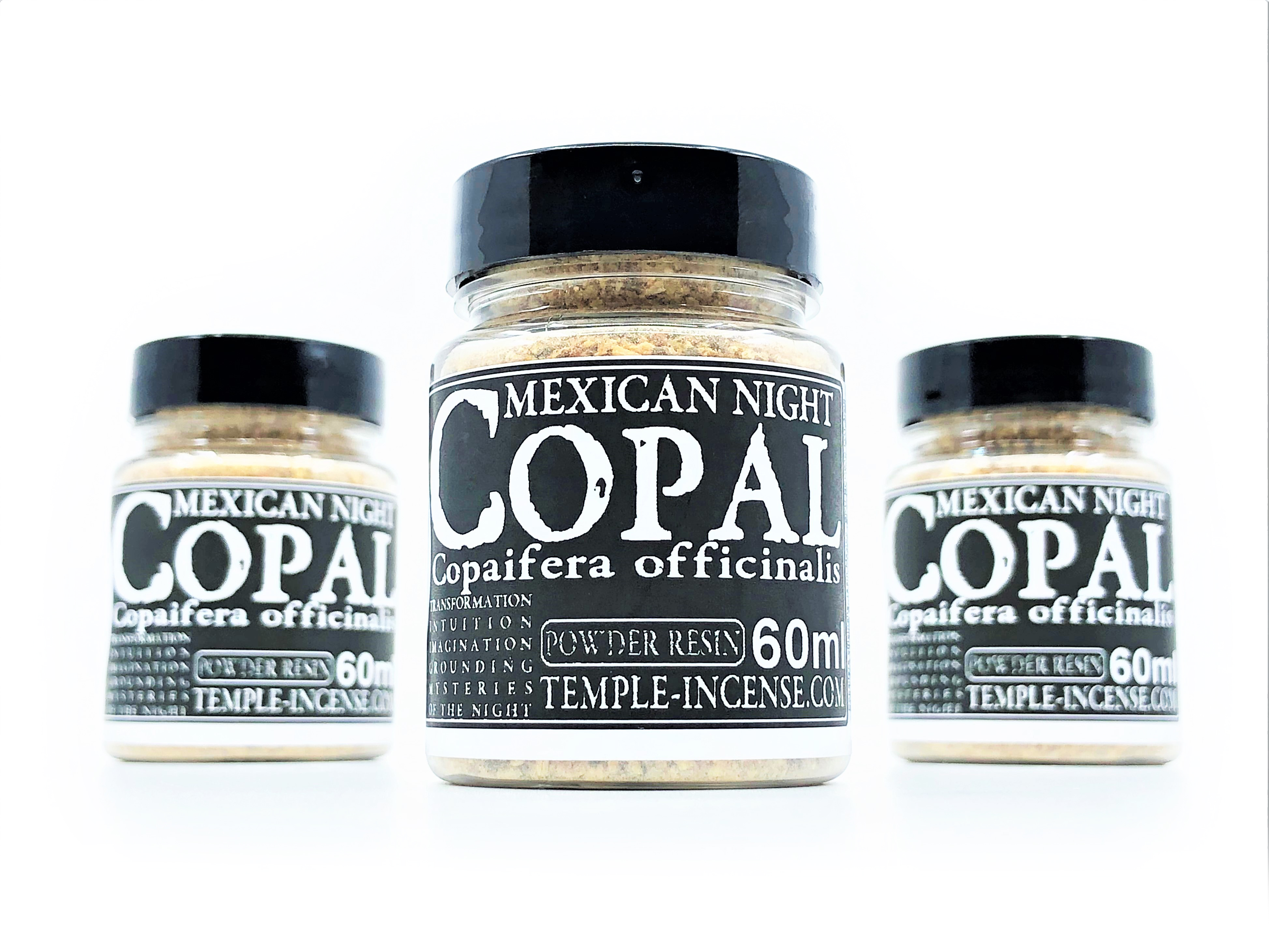

Black Copal (Copaifera officinalis)


- Secure payment by card
- E-mail us, we reply swiftly!
- Ships in 1-3 business days
- Fast and secure global shipping
Some aromatic plants and products may have a historical use of folkloric nature, but we offer this product as incense and/or botanical curiosa; neither food grade, for consumption nor medical use, unless other is stated. This means that you should contact your doctor even though, for example, frankincense have been used during the Middle Ages as a remedy for bubonic plague. Avoid contact with skin and eyes. Keep away from children and animals. The snuffs containing tobacco should be used moderately and not daily since tobacco is addictive. The long-term use of tobacco snuff is unknown and should therefore be used with this in mind.
Description
Article no.: 0489
Common Name: Black Copal / Night Copal
Scientific name: Copaifera officinalis
Part of the plant: Resin
Origin: Mexico
Scent: Medium heavy, sweet, spicy
Usage: Solitary or incense mixtures
Magical usage: Divination, sacrifice to deities, cleansing body, spirit & soul, death processes & transformation
Magic properties: Mysteries of the night, exploration of the unknown, awareness of the subconscious
Background
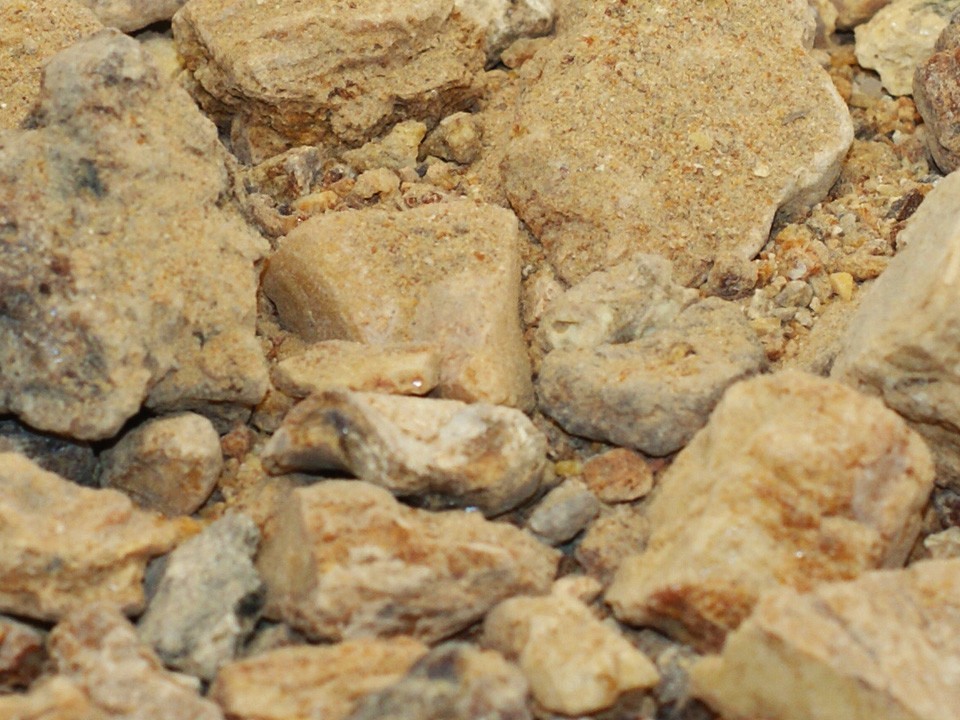
Copal is thus not the name of the resin from a specific tree, but rather a collective name for resins with specific properties; usually hard (not gum/gel-like). The name comes from the Aztec Nahuatli word "Copalli". The Mayan word for copal is "Pom", which translates to incense, not resin. Mayan communities in southern Mexico use Copal of trees from Burseraceae (Copal family), which also Palo Santo (Bursera graveolens), Frankincense/Olibanum (Boswellia sp.) and Myrrh (Commiphora myrrha) belongs to.
Also this Copal (Copaifera officinalis) belongs to this family and the tree can be found in many South American countries. Over the centuries, different types of Copal have become very popular and have spread and are now grown on most continents.
Andra namn
Night Copal, Copaiba, Copal, Balsam Copaiba, Copaiva, Jesuit's Balsam.
Fragrance
This Black Copal (Copaifera officinalis) sweet and spicy scent. It's heavier than the other varieties of Copal and is said to "carry the sacred energies of the night", which opens our awareness to the unknown and our subconscious.
Magical use & properties
Traditionally, copal has been used, among other things, as a sacrifice to deities, and has even been called "food for the gods". This makes Copal also today an excellent sacrifice to the deities you work magically with.
Another traditional use of Copal is as a tool for divination. Since the Copal has a thick white smoke, the shaman can interpret the smokes patterns. Another traditional South American way of divining with Copal is that the shaman keeps corn grains under the smoke while recites holy words / verses / songs, then throwing the grains and interpreting their patterns. The same method can of course be applied to runes, tarot cards or other tools for divination.
Copal is common in sweat lodge ceremonies to purify body, spirit and soul. A ceremony used by both North and South America's indigenous people & tribes.
The resin from Copal is excellent for use solitary, but also a common ingredient in incense mixtures. Copal has been called South America's Frankincense (another resin, from the Boswellia family of trees). The Copal is much sweeter and fruity than the frankincense's thicker and spicy scent.
The Black Copal/Night Copal is soothing and calming and helps us to get in touch with the deeper aspects of our being. It is often burned in Mexico on the day of the dead (Día de los muertos) where it is said to help the dead find their way back home.
Legal disclaimer
Some aromatic plants and products may have a historical use of folkloric nature, but we offer this product as incense and/or botanical curiosa. Neither food grade, for consumption nor medical use. Avoid contact with skin and eyes. Keep away from children and animals.