
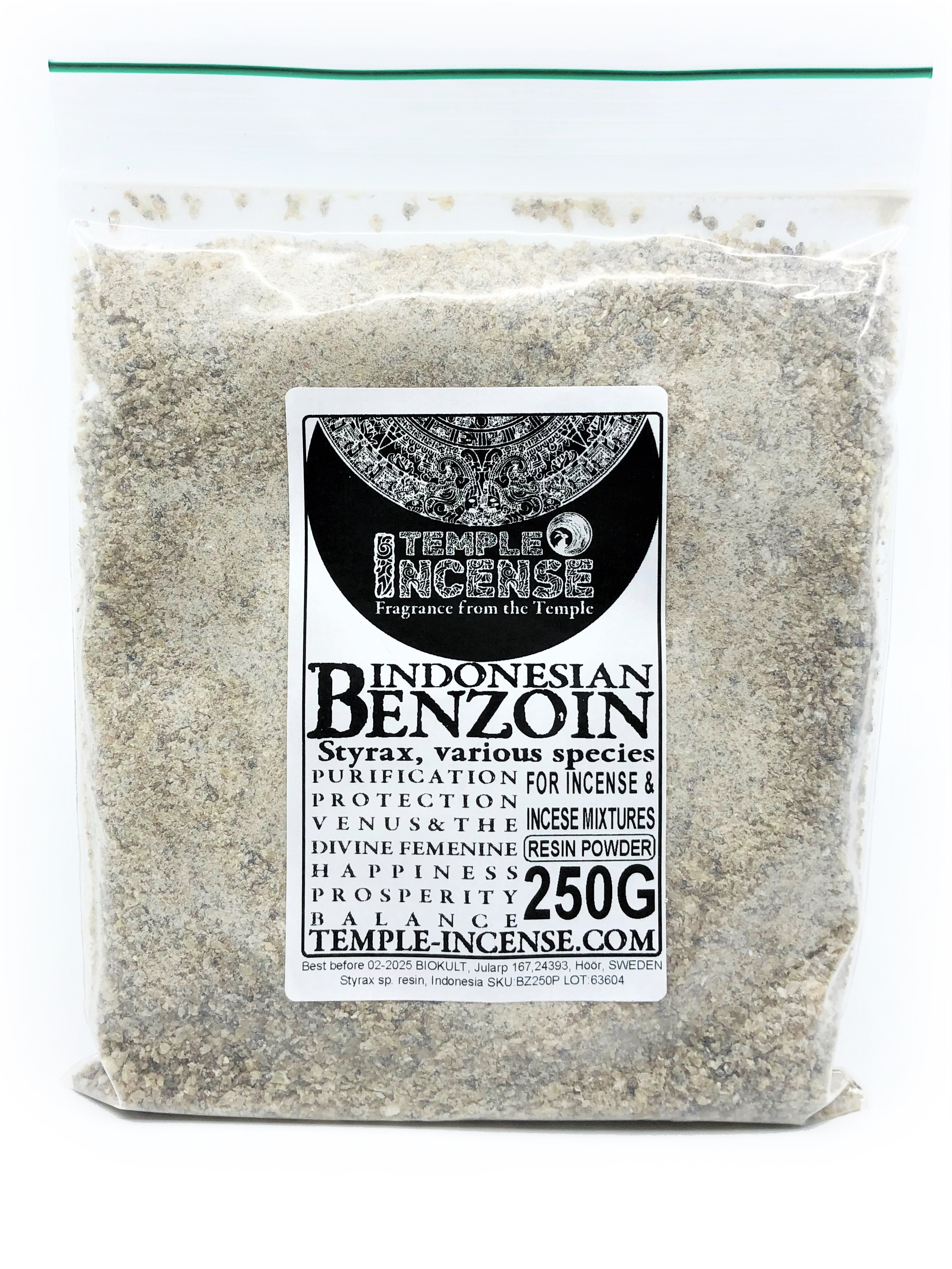
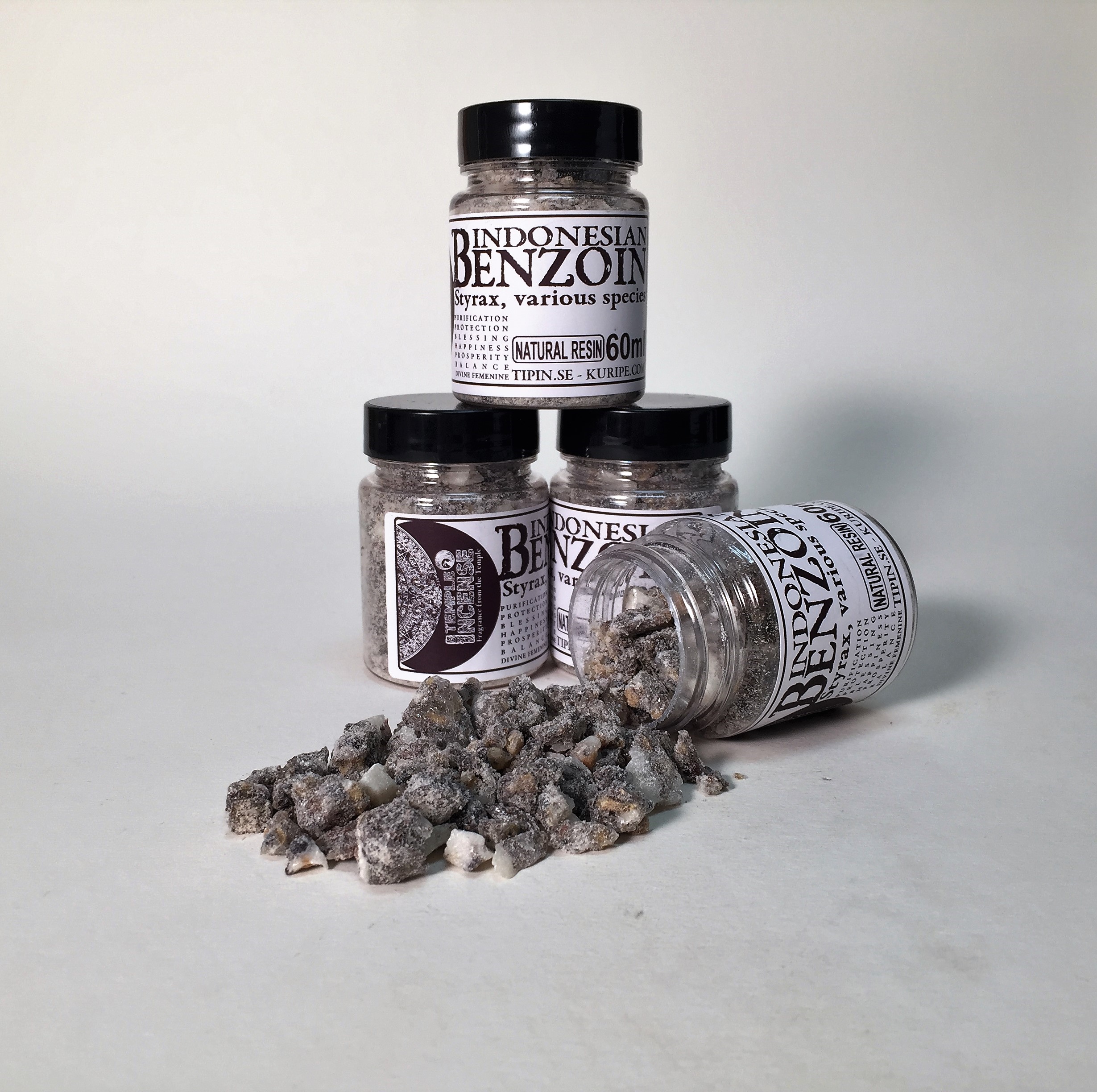
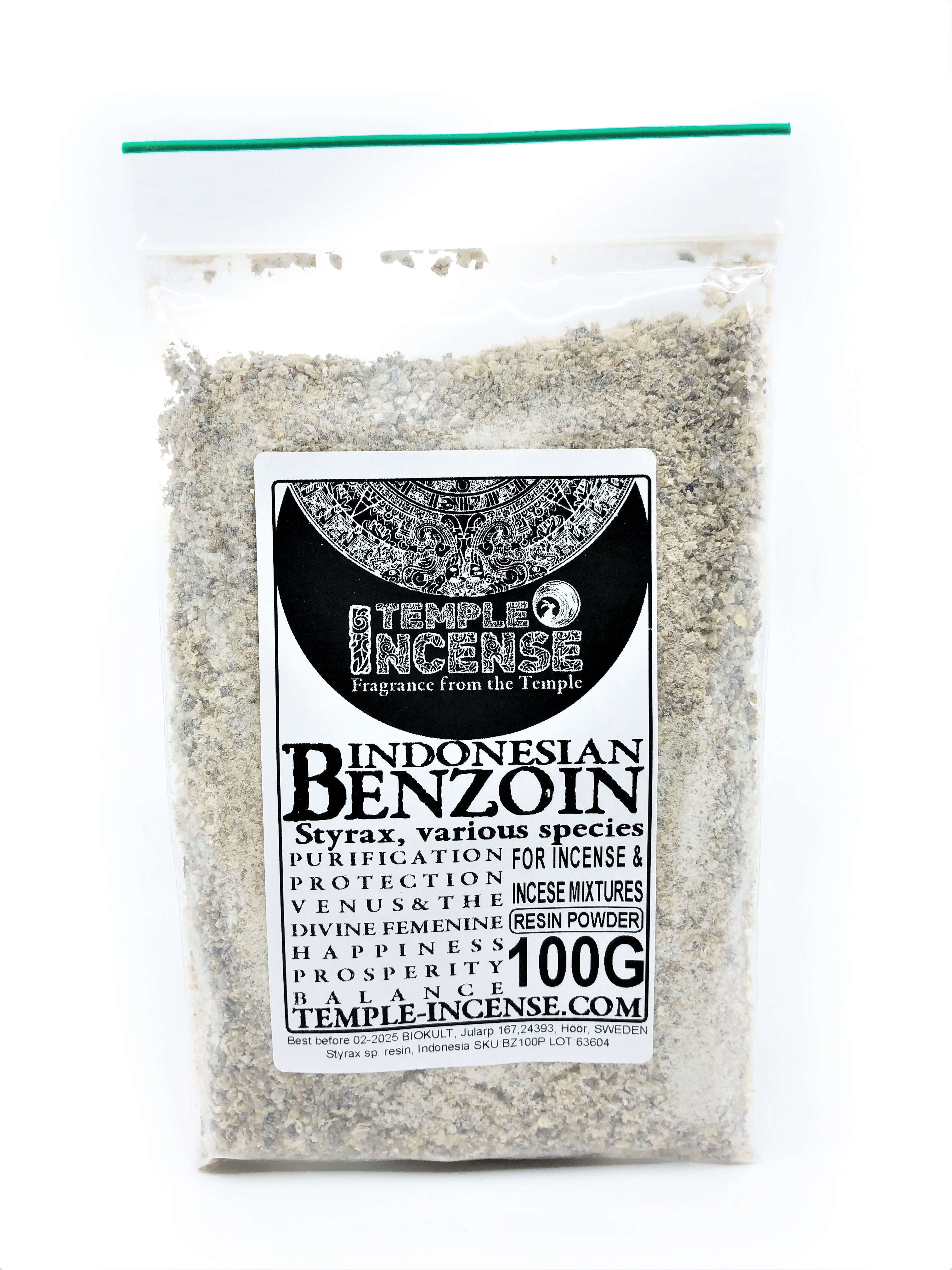
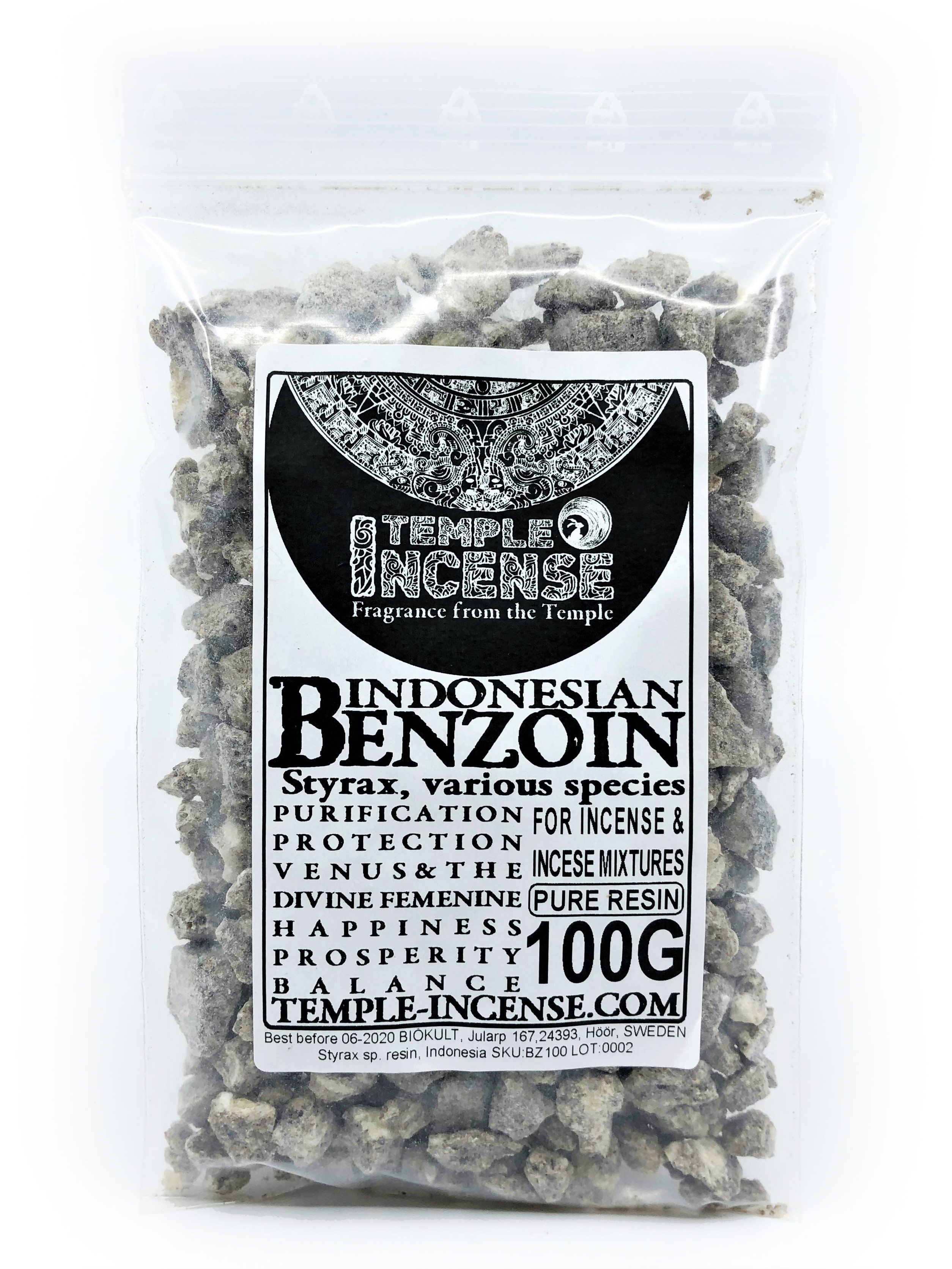
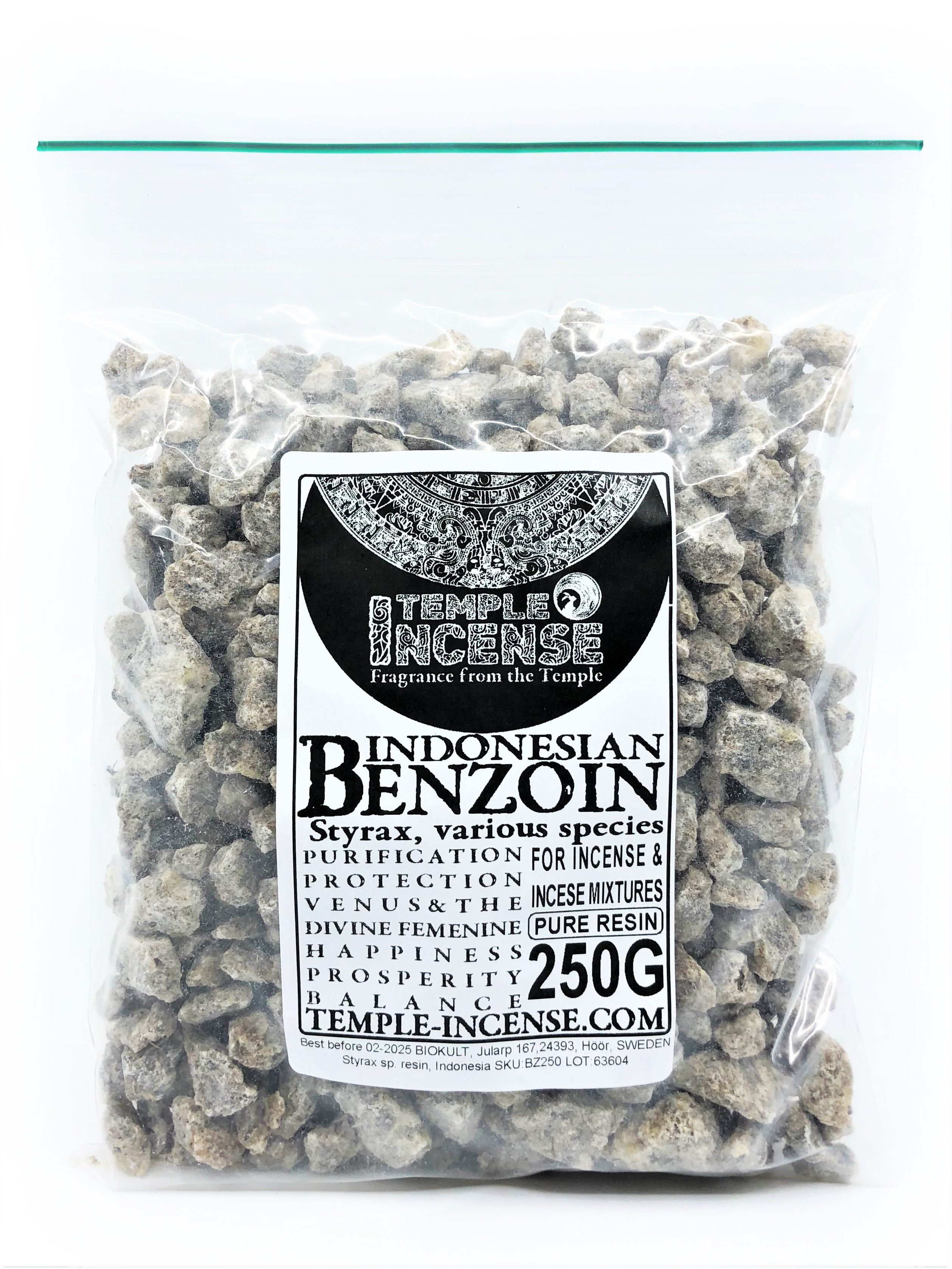
Benzoin (Styrax sp.)


- Secure payment by card
- E-mail us, we reply swiftly!
- Ships in 1-3 business days
- Fast and secure global shipping
Some aromatic plants and products may have a historical use of folkloric nature, but we offer this product as incense and/or botanical curiosa; neither food grade, for consumption nor medical use, unless other is stated. This means that you should contact your doctor even though, for example, frankincense have been used during the Middle Ages as a remedy for bubonic plague. Avoid contact with skin and eyes. Keep away from children and animals. The snuffs containing tobacco should be used moderately and not daily since tobacco is addictive. The long-term use of tobacco snuff is unknown and should therefore be used with this in mind.
Description
Article no.: BZ
Common Name: Benzoin
Scientific name: Styrax sp.
Part of the plant: Resin
Origin: Indonesia
Scent: Heavy, musky, creamy & sweet with elements of vanilla
Usage: Solitary or in incense mixtures, perfumery
Magical use: Ceremonial combustion, sacrifice to deities, get in touch with Shakti and the primordial energy
Magical properties: Creativity & Inspiration, Shakti ("The Divine Feminine"), Purifying & Protecting, Blessing, Success, Happiness, Balance, Grounding, Healing, Strength & Transformation
Background
Benzoin is a balsamic resin obtained from the bark of several species of trees in the genus Styrax. It is used in perfumes, some kinds of incense, as a flavoring, and medicine (tincture of benzoin). It is distinct from the chemical compound benzoin, which is ultimately derived from benzoin resin; the resin, however, does not contain this compound.
Benzoin is also known gum benzoin or gum benjamin, but "gum" is misleading as benzoin is not a polysaccharide. Its name came via the Italian from the Arabic lubān jāwī (لبان جاوي, "frankincense from Java"). Benzoin is also called storax, not to be confused with the balsam of the same name obtained from the Hamamelidaceae family.
Benzoin is a common ingredient in incense-making and perfumery because of its sweet vanilla-like aroma and fixative properties. Gum benzoin is a major component of the type of church incense used in Russia and some other Orthodox Christian societies, as well as Western Catholic Churches. Most benzoin is used in Arab States of the Persian Gulf and India, where it is burned on charcoal as an incense. It is also used in the production of Bakhoor (Arabic بخور - scented wood chips) as well as various mixed resin incense in the Arab countries and the Horn of Africa. Benzoin is also used in blended types of Japanese incense, Indian incense, Chinese incense (known as Anxi xiang; 安息香), and Papier d'Arménie as well as incense sticks. Benzoin is burnt in Hindu temples to Brahma, Vishnu and Shiva.
There are two common kinds of benzoin, benzoin Siam and benzoin Sumatra. Benzoin Siam is obtained from the tree Styrax tonkinensis, found across Thailand, Laos, Cambodia, and Vietnam. Benzoin Sumatra is obtained from the tree Styrax benzoin, which grows predominantly on the island of Sumatra. Unlike Siamese benzoin, Sumatran benzoin contains cinnamic acid in addition to benzoic acid. In the United States, Sumatra benzoin (Styrax benzoin and Styrax paralleoneurus) is more customarily used in pharmaceutical preparations, Siam benzoin (Styrax tonkinensis et al.) in the flavor and fragrance industries.
In perfumery, benzoin is used as a fixative, slowing the dispersion of essential oils and other fragrance materials into the air. Benzoin is used in cosmetics, veterinary medicine, and scented candles. It is used as a flavoring in alcoholic and nonalcoholic beverages, baked goods, chewing gum, frozen dairy, gelatins, puddings, and soft candy.
Fragrance
Benzoin from this Indonesian Styrax sp., and Benzoin in general, is very sweet with hint of vanilla, it is definitely musky and has a feminine character that brings the thoughts to the yoni. The smoke is thick, heavy and creamy.
Use & Magical Properties
Benzoin has come to us at KURIPE.COM, to represent Shakti and "the Sacred Feminine". The heavy, musky, creamy and sweet scent brings the thoughts of a women's vagina and the mystery of the symbolic cave. Benzoin is burnt in Hindu temples to the main masculine gods Trimutri-Brahma, Vishnu and Shiva. Which may possibly be seen as a gift of the feminine to the masculine. The three consorts of Trimutri are Tridevi, the three goddesses Saraswati, Lakshmi and Parvati / Kali. Benzoin can thus be represented by Tridevi, the primordial energy / female power. Acording to Crowleys Liber 777, Benzoin corresponds to Venus and the Kabbalistic sphere Netzach (7).
The scent of Benzoin gives creativity and inspiration, purity and protection, blessing, success, happiness, balance, strength and transformation, as well as grounding and healing.
Legal disclaimer
Some aromatic plants and products may have a historical use of folkloric nature, but we offer this product as incense and/or botanical curiosa. Neither food grade, for consumption nor medical use. Avoid contact with skin and eyes. Keep away from children and animals.