

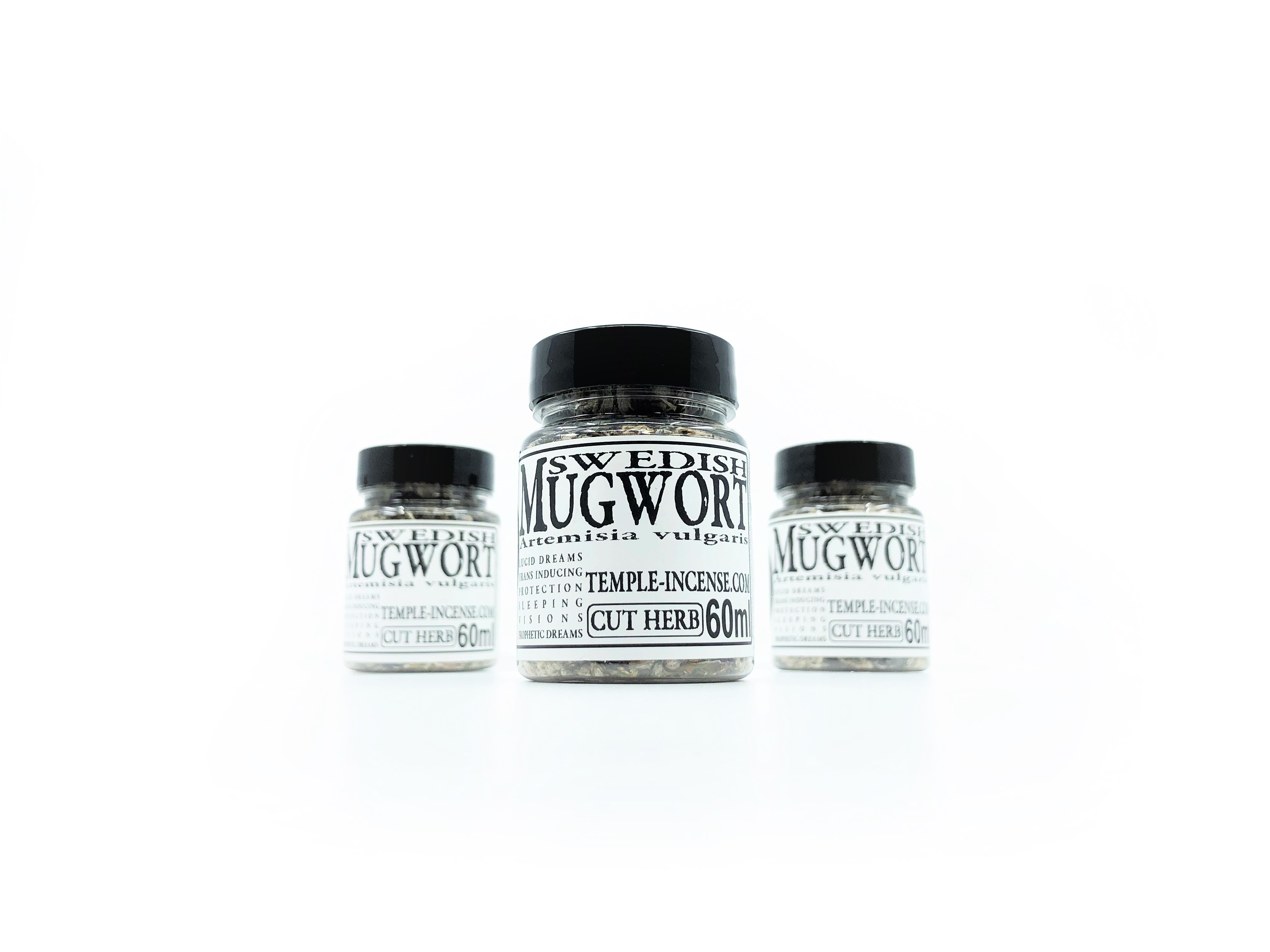
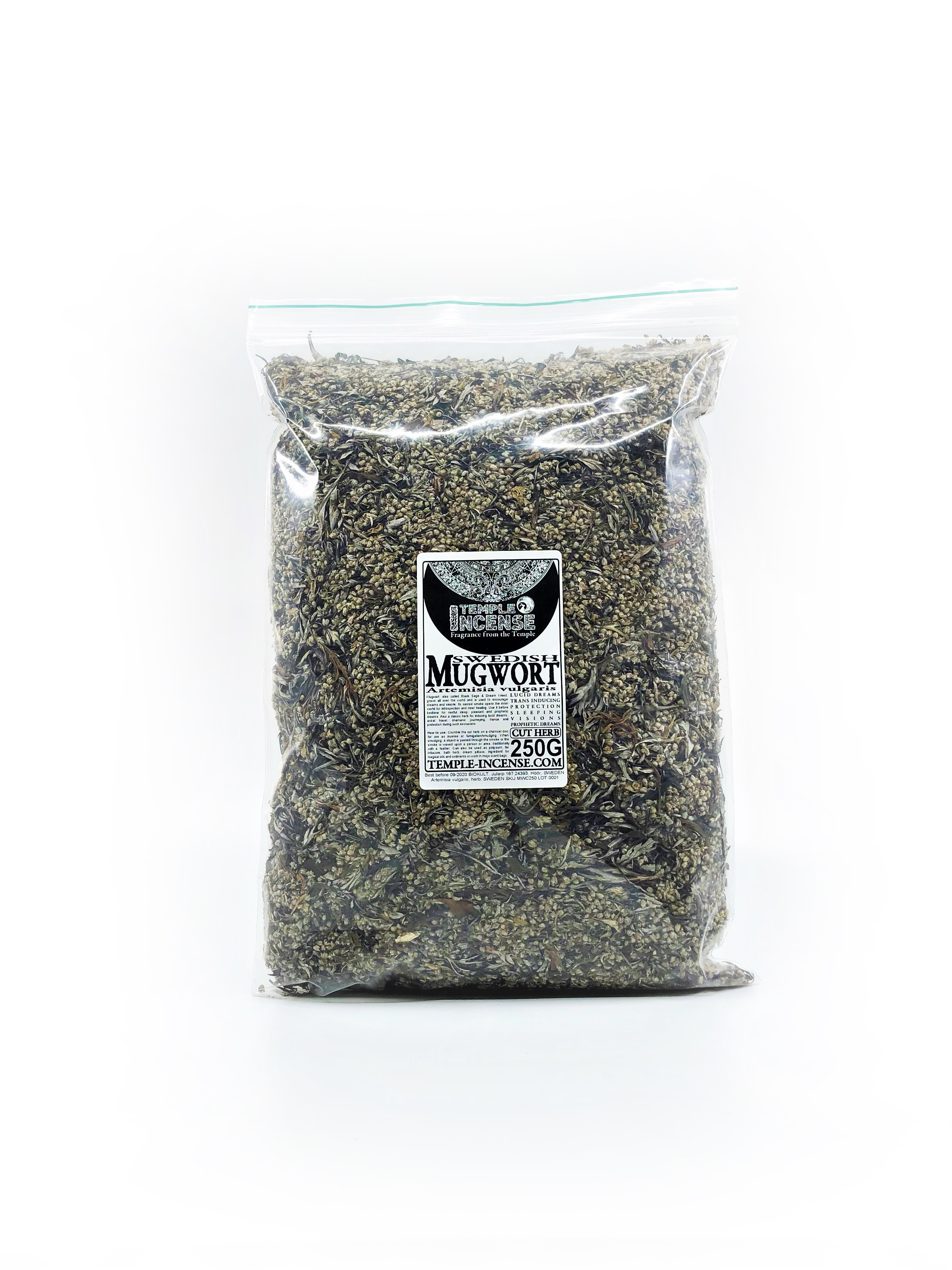
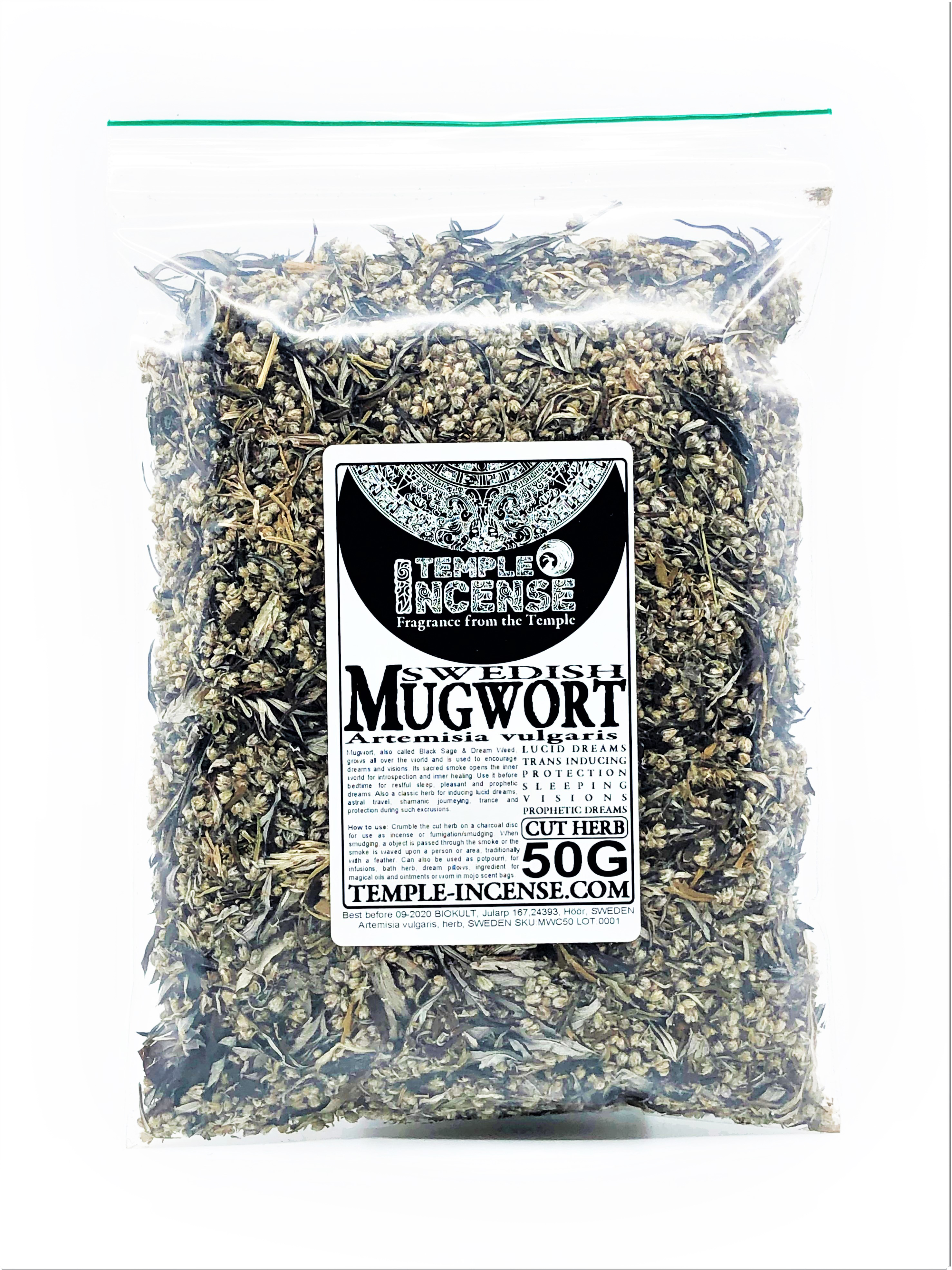
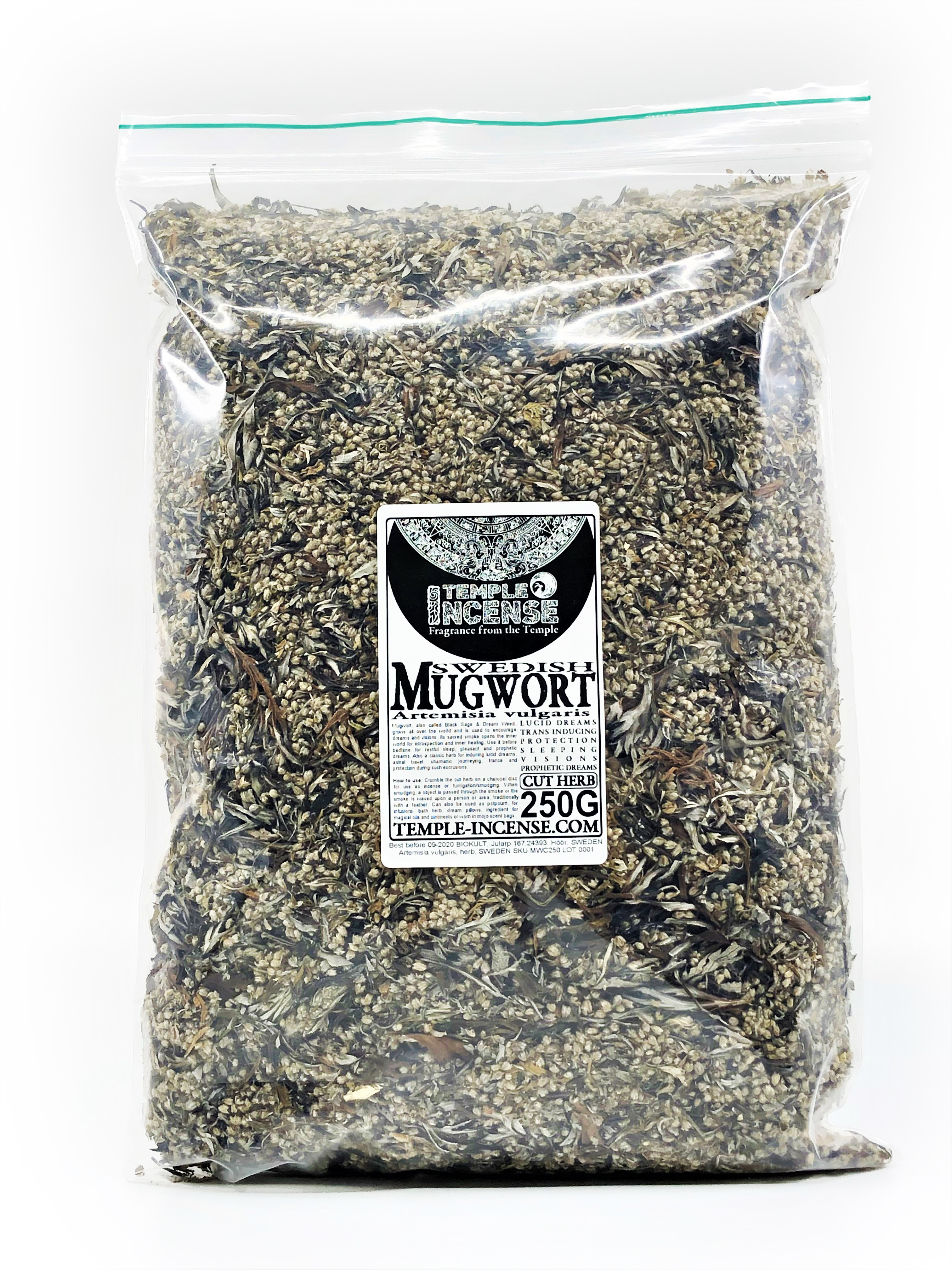
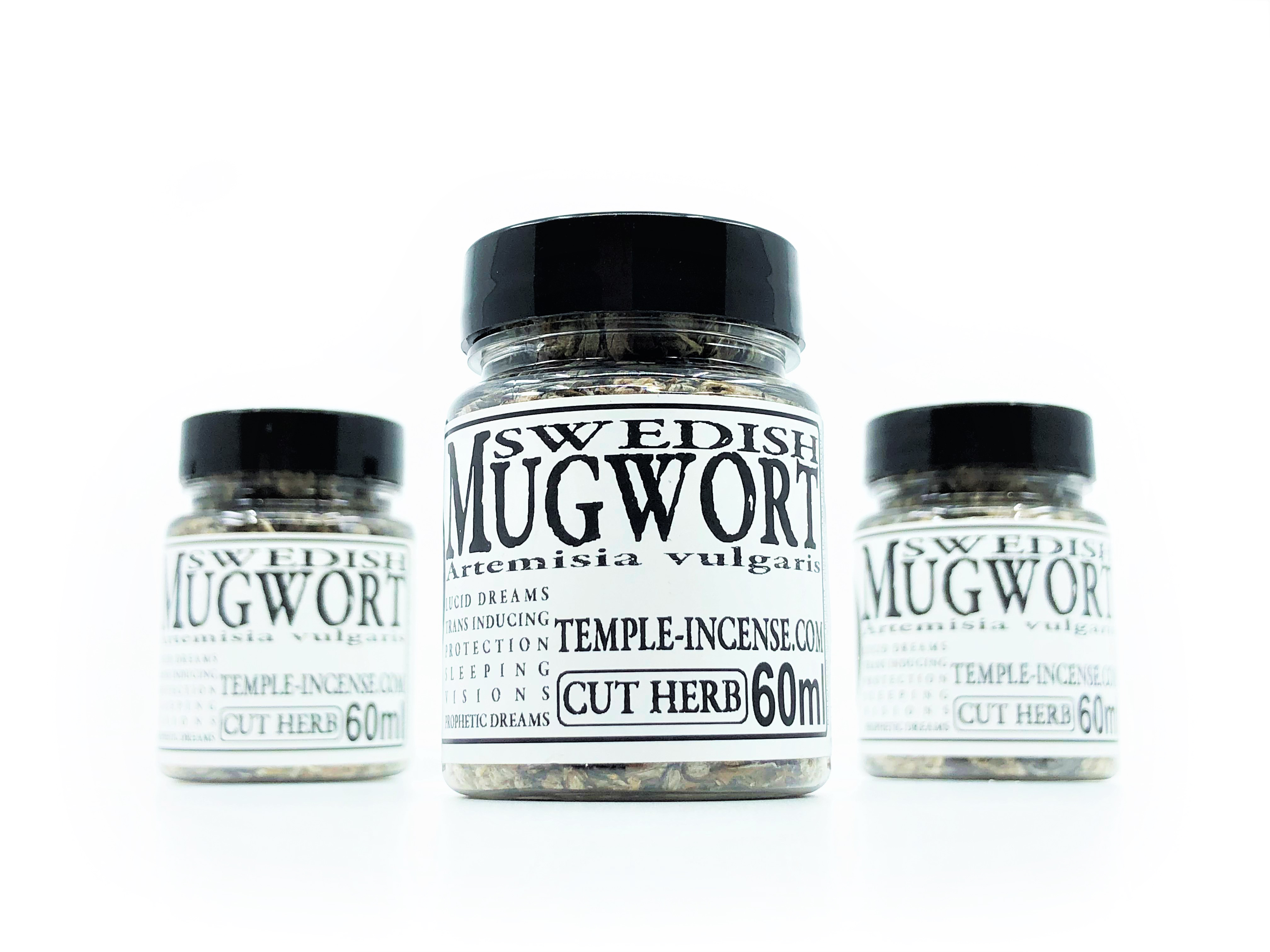
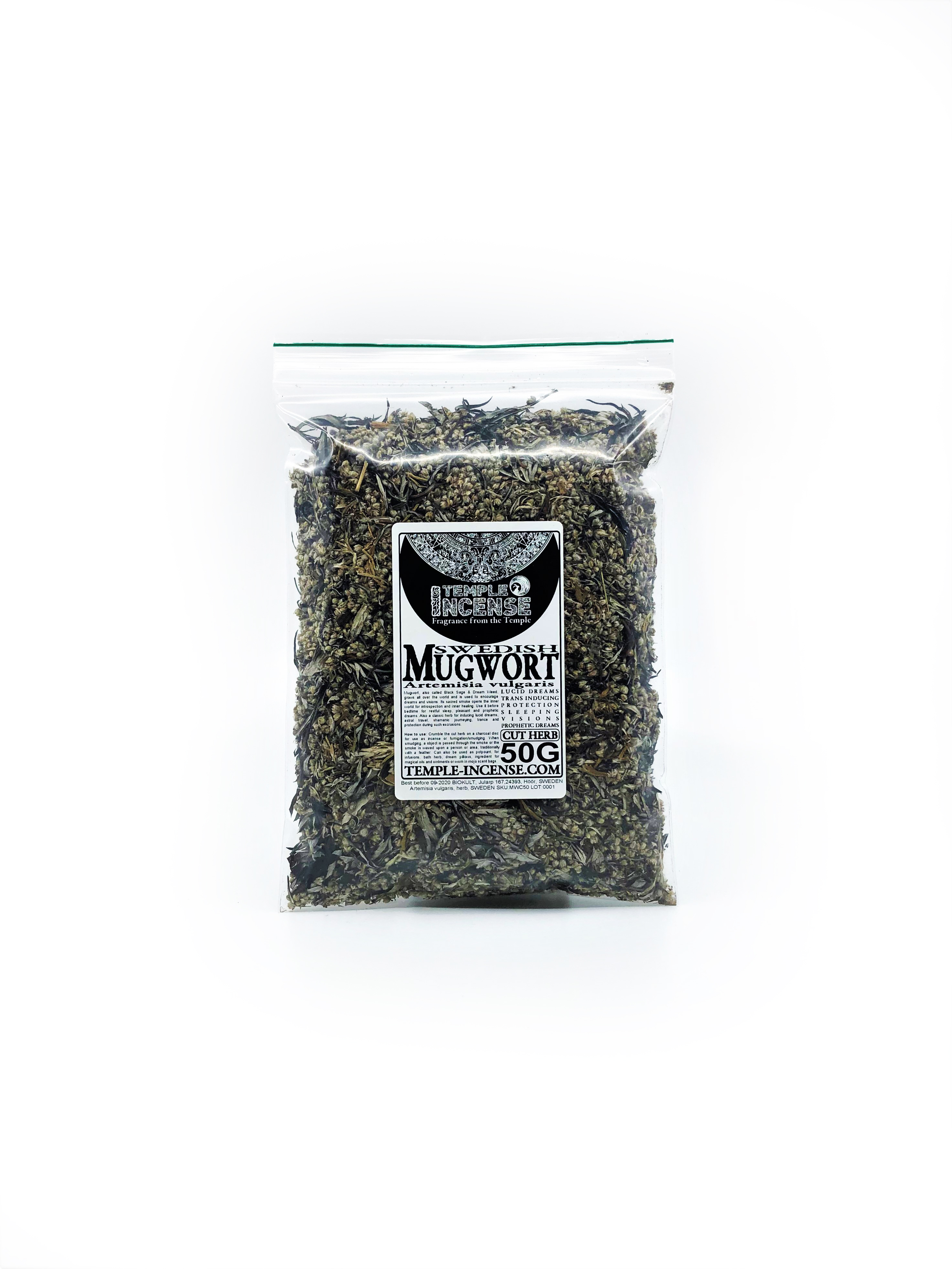
Mugwort (Artemisia vulgaris)


- Secure payment by card
- E-mail us, we reply swiftly!
- Ships in 1-3 business days
- Fast and secure global shipping
Some aromatic plants and products may have a historical use of folkloric nature, but we offer this product as incense and/or botanical curiosa; neither food grade, for consumption nor medical use, unless other is stated. This means that you should contact your doctor even though, for example, frankincense have been used during the Middle Ages as a remedy for bubonic plague. Avoid contact with skin and eyes. Keep away from children and animals. The snuffs containing tobacco should be used moderately and not daily since tobacco is addictive. The long-term use of tobacco snuff is unknown and should therefore be used with this in mind.
Description
Article no.: MW
Summary
Common Name: Mugwort, dream weed, black sage
Scientific name: Artemisia vulgaris
Part of the plant: Leaf & stem
Origin: Sweden
Scent: Slighly sweet
Usage: Solitary or in incense mixtures, medical & health promotion
Magical use: Ceremonial combustion, scent boxes & scented mojo bags, ointments, oils and tinctures
Magical properties: Prophetic dreams, lucid dreaming, mildly intoxicating, scrying, divination, visions
Description
Mugwort is a common name for several species of aromatic plants in the genus Artemisia. Mugwort is also known as “Dreamweed” for its unique ability to stimulate dreams. It is renowned as a smudging herb for its subtle, sweet scent and dream-inducing qualities. It has a long history of use in the Pagan tradition and is still used in modern-day Pagan magical practices as incense and for smudging or spell work. With heavy smudging the effects of the plant spirit is noticeable and is sometimes referred to as "mild narcotic" in its effect. This mild trance state is perfect for scrying, divination, astral workings and vision quests.
In some magical traditions, Mugwort is associated with divination and dreaming. To bring about prophecy and divinatory success, make an incense of Mugwort to burn at your workspace, or use it in smudge sticks around the area in which you are performing divination rituals. Mugwort was also used in Anglo-Saxon Britain to cure people who had fallen victim to “elf-shot,” which appears to be a catch-all term used to apply to people who had become sick at the hands of evil spiritual entities. Sailors often smoked mugwort instead of Cannabis or Tobacco, and the plant came to be known as “Sailor’s tobacco.” North American First Nation tribes used Mugwort leaves to rub on one’s body as protection from ghosts. They also wore necklaces made of the leaves to avoid dreams about dead people.
Artemisia, Ἀρτεμισία, referring to the Greek goddess Artemis who so benefited from a plant of this family that she gave it her own name. Plants described by Dioscorides and Pliny like Wormword or Mugwort from which the genus name Artemisia is taken. An alternative possibility for the derivation of this name is that it comes from Queen Artemisia II of Caria, sister and wife of King Mausolus, who ruled after his death from 352 to 350 BCE. and built during her short reign one of the Seven Wonders of the Ancient World, the Mausoleum at Halicarnassus, which she unfortunately did not live to see the completion of.
Artemisia vulgaris is used from way back to let recover tired travellers and to protect them against evil spirits and wild animals. Roman soldiers laid it in their sandals against painful feet, hence the name "bij-voet" in Dutch. William Coles (1626 - 1662 CE), an herbalist, botanist, became entranced by the idea of plant signatures. In the Art of Simpling, 1656, he wrote: "And if a Footman take Mugwort and put it into his shoes in the morning, he may go forty miles before noon and not be weary…" Dr. Karl Wilhelm Burdach (1781 - 1842) of Triebel, discovered that the root of the Artemisia vulgaris is an excellent remedy in epilepsy. Artemisia is used as food plant by the caterpillars of a number of Lepidoptera (butterflies and moths).
Mugwort is revered in Chinese Medicine, where they all it Ai-Ye & it’s used in moxibustion, done by acupuncturists for all sort of things but most commonly to move breech babies though i had it this morning to raise Qi. The word “moxy” comes from “moxa” which is the medicinal application of Mugwort to the Chinese meridians et al.
Other names
Bijvoet, Artemisia vulgaris, mugwort, dream weed, black sage.
Legal disclaimer
Some aromatic plants and products may have a historical use of folkloric nature, but we offer this product as incense and/or botanical curiosa. Neither food grade, for consumption nor medical use. Avoid contact with skin and eyes. Keep away from children and animals.