
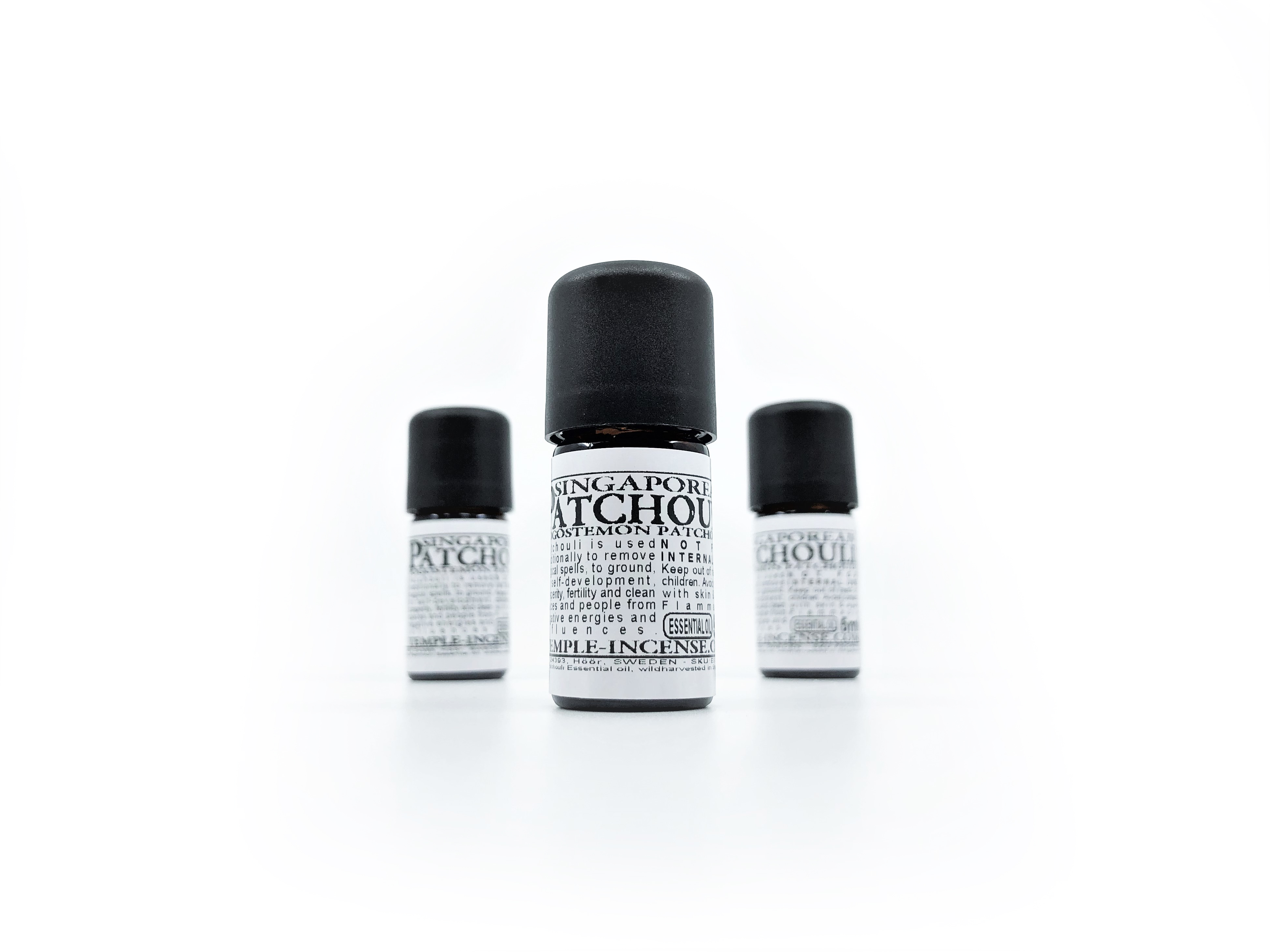
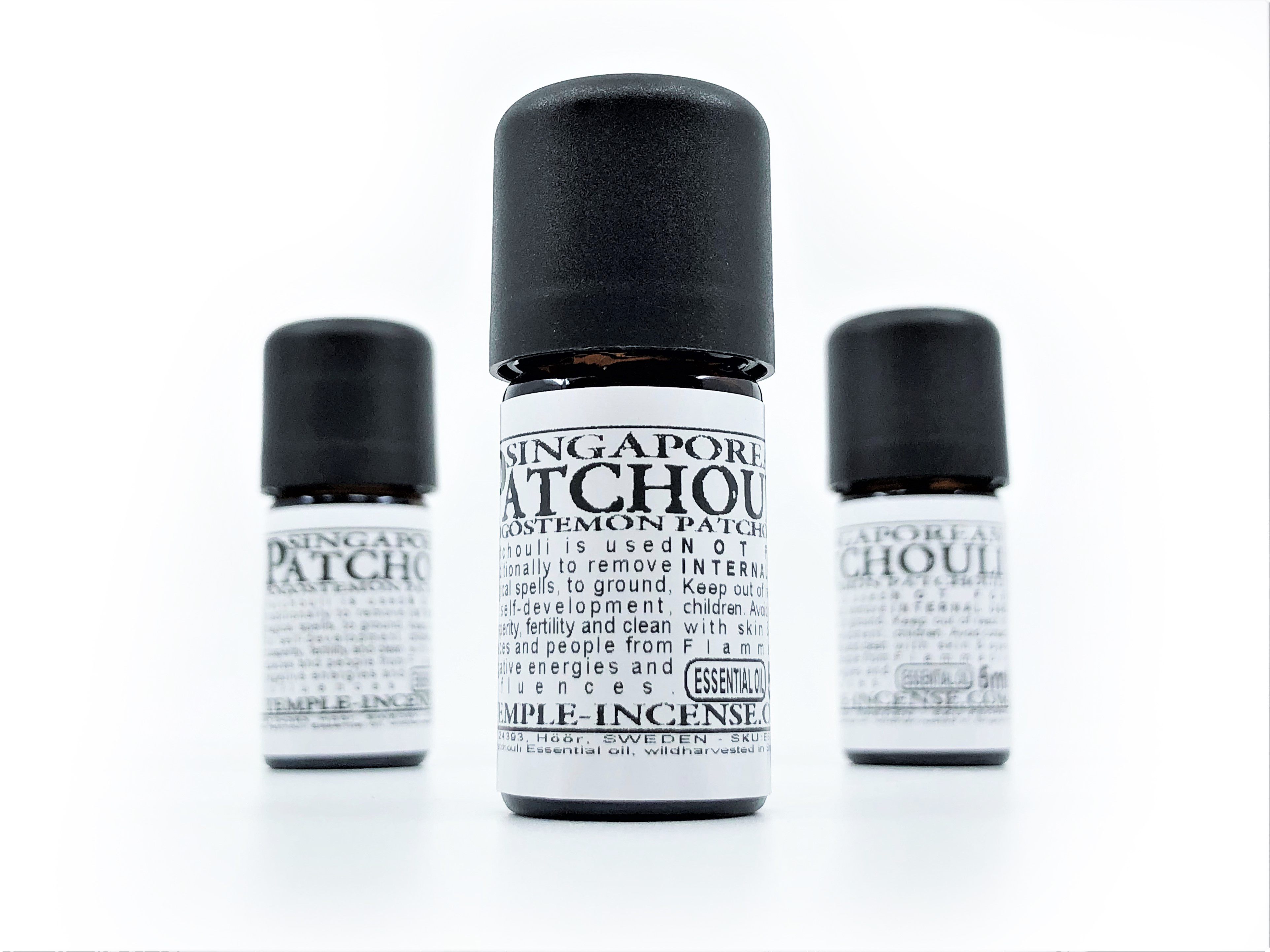
Patchouli (Pogostemon patchouli) - Essential Oil 5ml
- Secure payment by card
- E-mail us, we reply swiftly!
- Ships in 1-3 business days
- Fast and secure global shipping
Some aromatic plants and products may have a historical use of folkloric nature, but we offer this product as incense and/or botanical curiosa; neither food grade, for consumption nor medical use, unless other is stated. This means that you should contact your doctor even though, for example, frankincense have been used during the Middle Ages as a remedy for bubonic plague. Avoid contact with skin and eyes. Keep away from children and animals. The snuffs containing tobacco should be used moderately and not daily since tobacco is addictive. The long-term use of tobacco snuff is unknown and should therefore be used with this in mind.
Description
Article no.: ESOPA5
Essential Oil, 5ml dropper bottle, wildharvested in Singapore.
Use 3-7 drops in an aroma lamp to fill the temple or a home with the fragrance of Patchouli for several hours. Connected to the planet Venus and thus to material prosperity, sensuality, passion and pleasure, good courage, ease in body, spirit and soul. Patchouli grounds and balances emotions, banishes lethargy and sharpening the wits. A tool against depression, worry and anxiety. In Hinduism, Krishna is considered to be inherent in this plant. A few drops in an aroma lamp fills the temple or home with its scent and magic!
Background
Patchouli is a bushy herb from the Lamiaceae family (mint family). The plant originates in Asia's tropical regions and is grown almost exclusively in Indonesia today. The smell of Patchouli is heavy and strong. It has been used for centuries in perfumes and scented soap and skin/hair products. Patchouli has also been used as an aphrodisiac, a tradition probably derived from India, where it is used as a anointment in tantric sexual practice.
During the 1700s and 1800s, silk traders between China and the Middle East packed their precious fabrics with dried Patchouli leaves to prevent the moths from laying their eggs on the fabric. Historians speculate that this association with sumptuous Eastern goods is why Patchouli was considered by Europeans from that time to be a luxurious scent. This trend has continued until today in modern perfumery.
Patchouli oil and incense rose sharply in popularity during the 1960s and 1970s, mostly among those devoted to the free love and the hippie lifestyle, partly due to the sharp smell of Patchouli, known to cover the smell of burned cannabis (and body odor). During the Vietnam War, US soldiers used Patchouli to mask the smell from graves of enemy soldiers who were killed in battle. War protesters from this era used Patchouli on their own bodies to show that "We are all the same race, we are the same as the enemy soldiers". The Hare Krishna movement may also have been responsible for Patchoulin's increased popularity and use, as God Krishna is said to inherent the Patchouli plant.
Fragrance
Strong and heavy, a rich musky-sweet scent with a spicy and herby character.
Use & Magical Properties
Patchouli is an excellent solitary incense, but works equally well in incense mixtures when the corresponding energy is desired. The cut leaves can be sprinkled on a lit charcoal disc, but also smells very strong without being ignited. This makes Patchouli perfect to have as a potpourri in scent boxes or in a mojo-scent bags. Also there, it can be used solitarily or in combination with other fragrant plants with desired energies / properties. For the crafty, Patchouli is a perfect scented ingredient in self-made soaps and cosmetic products. As mentioned above, Patchouli has been used as the main ingredient in ointments for tantric (sex magic) ceremonies, and is therefore also excellent as an ingredient in massage oil (plenty of recipe for making your own massage oil is available online). You can then leave the oil in a jar of Patchouli for a few weeks to extract the essential oils into the massage oil. The final product is then siped and bottled.
Patchouli is linked to the planet Venus and thus to material prosperity (in the Vedic astrology), sensuality, passion and pleasure, good courage, ease in body, spirit and soul. Patchouli grounds and balances emotions, banishes lethargy and sharpening the wits. A tool against depression, worry and anxiety. Patchouli is said to create a sensual atmosphere. In Hinduism, Krishna is considered to be inherent in this plant.
General dosing recommendations for essential oils
1 tablespoon = 15 ml
1 ml of essential oil = 20-25 drops
dr. = drops
Massage Oil: 6-10 dr. essential oil mixed in 2 tablespoons vegetable oil
Body oil: 5 dr. essential oil mixed in 1 tbsp. veg. oil
Facial Oil: 2 dr. essential oil mixed in 2 tablespoons of veg. oil
Aromatherapy Perfume: 20 dr. essential oil mixed in 10 ml of alcohol or jojoba
Bath: 6-8 dr. essential oil mixed in 1 tbsp. veg. oil
Sauna: 20 dr. essential oil mixed in 1 liter of water is poured on the stones
Footbath: 6 dr. essential oil is mixed with 4 liters of hot water
Gargles: 1 dr. essential oil mixed in a glass of water
Steaminhalation: 1-2 dr. essential oil mixed in 2 cups hot water into the inhaler
Dry inhalation: 1-3 dr. essential oil in handkerchief
Room Spray: 10 dr. essential oil mixed in 0,2 liters of water
Aroma Lamp: 3-7 dr. essential oil mixed in water-filled bowl
Aroma Stone: 5-10 drops of essential oil directly on the stone
NOTE! Pure essential oils are highly concentrated essences that should not be used directly on the skin (except Lavender). Essential oils must be mixed with vegetable oil such as almond oil, jojoba oil before being applied to the skin. Essential oils must not come into contact with mucous membranes and must be kept out of reach of children. Keep essential oils dark and cool to preserve their scent and strength better.
Legal disclaimer
Some aromatic plants and products may have a historical use of folkloric nature, but we offer this product as incense and/or botanical curiosa. Neither food grade, for consumption nor medical use. Avoid contact with skin and eyes. Keep away from children and animals.